Whisperwood Nursing & Rehab: Abuse Reporting Failure - TX
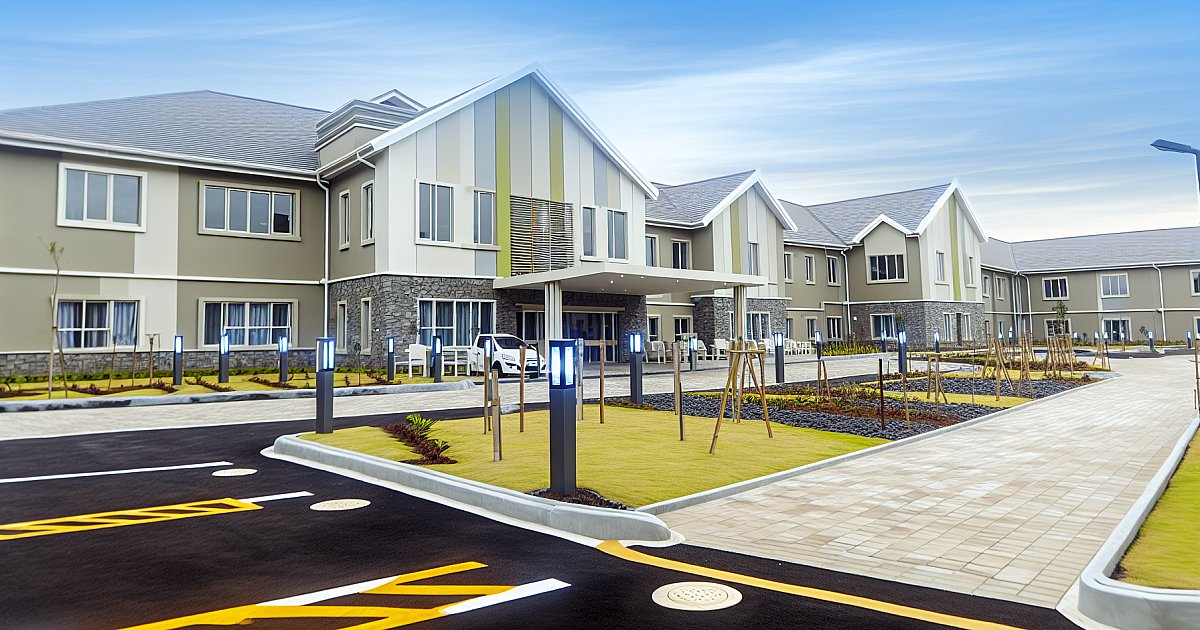
The incident came to light during a complaint inspection completed August 15, 2025, at Whisperwood, located at 5502 W 4th St in Lubbock. What inspectors found was not a facility that had investigated a resident conflict and made a judgment call. It was a facility where the information never moved at all — not up the chain of staff, not to the family, and not in any documented way — until the family forced it to.
The two residents at the center of the incident, identified in inspection records only as Resident 1 and Resident 2, both lived on the facility's locked unit, which houses residents with behavioral conditions. The exact date of the incident was not established with certainty during the investigation. LVN B, the nurse on duty, told inspectors she was unsure of the exact date.
What is known is this: CNA A was in the area when Resident 2 began yelling at Resident 1. The yelling, according to what CNA A relayed to LVN B, was because there was urine on the floor. Resident 2 was raising her voice at Resident 1 about it.
LVN B told inspectors she walked to Resident 2's room and told her she did not need to raise her voice. Then she left. She said that five minutes later, neither resident could remember the incident. She said Resident 1 did not appear afraid. She said CNA A had not told her that Resident 1 was afraid. She said she considered Resident 2's yelling to be one of her behaviors, the kind of thing that happened on the locked unit, something that required redirection and not much else.
She did not call Resident 1's family that day. She did not follow up with CNA A. She did not file a report with the facility's abuse coordinator. She said she could not give a reason why she hadn't notified the family because she could not remember what else had been going on that day.
"An incident of the same nature involving Resident 1 and Resident 2 would have been an incident that she would notify family of," LVN B told inspectors. She said it was her responsibility to notify family or responsible parties of significant events. She had been trained on the facility's abuse policy, she said, within the past 30 to 60 days, by the administrator, the director of nursing, and the assistant director of nursing.
She still hadn't called.
What moved the information instead was CNA A. At some point after the incident, CNA A told Resident 1's family that Resident 1 had felt threatened by Resident 2. That conversation, which happened outside any formal reporting structure, was what prompted the family to contact the administrator directly. The administrator's involvement is what triggered the complaint that led to the inspection.
The director of nursing, in an interview with inspectors, laid the failure squarely on CNA A. The DON said the nurse involved was responsible for notifying the family, but that notification could only happen after the incident was reported to the nurse. Because CNA A had not reported the incident to LVN B or to the abuse coordinator, the DON said, the family notification never happened. The DON called it improper. The DON said the potential negative outcome was that the family would not be aware of what was going on with their resident.
That is exactly what happened.
What the inspection record does not show is any account of what Resident 1 experienced during the incident or in the days after, when her family did not hear from anyone at Whisperwood. The report does not describe whether she was distressed, whether she avoided common areas, whether she asked about her family. LVN B said Resident 1 went back to her room within an hour. That is the last detail the record contains about Resident 1's condition following the incident.
LVN B told inspectors she did not know what specifically Resident 2 had said to Resident 1. CNA A had not described the words, only the subject — the urine on the floor — and the fact that Resident 2 was yelling. LVN B said she had voiced to Resident 2 that she did not need to raise her voice, and that was it. She did not speak with Resident 1 about what had been said to her. She did not ask.
There is a separate thread in the inspection findings that is harder to explain than a single nurse's lapse in judgment. When inspectors requested the facility's written policy on notifying responsible parties, the facility did not produce one. The administrator and a regional nurse consultant were present during the inspection and did not provide the policy. The facility did hand over a policy about notifying physicians on August 22, a week after the inspection concluded. Inspectors made a second request, specifically for the family notification policy, that same afternoon. As of August 29, 2025, two weeks after the inspection, the policy had not been provided.
The facility either did not have a written policy governing how and when families are notified of incidents involving their residents, or it had one and declined to produce it. The inspection record does not resolve which.
LVN B said she knew it was her responsibility to notify families of significant events. The DON said it was improper that notification did not happen. Both of them described a system that existed, that had been trained on recently, that everyone understood applied to situations exactly like this one. But when inspectors asked for the document that governed that system, the facility went silent.
CNA A does not appear in the inspection record by name. There is no account of whether CNA A was interviewed formally, whether any disciplinary action followed, or whether the facility reviewed how the aide had handled the situation. The DON's explanation pointed to CNA A's failure to report upward, but the record does not show whether anyone asked CNA A why the report never happened, or what CNA A understood about the obligation to report.
What the record does show is that CNA A, at some point, told Resident 1's family what had occurred. That conversation, informal and undocumented, was the only notification the family received. It came not from a licensed nurse, not from the abuse coordinator, not from the director of nursing or the administrator. It came from an aide, in whatever form that conversation took, and it was enough to alarm the family into picking up the phone.
Resident 1's family made that call. The facility had not.
The inspection was classified as a complaint survey. The level of harm was listed as minimal harm or potential for actual harm, affecting few residents. The deficiency was not cited at the Immediate Jeopardy level. In the language of federal inspection classifications, this was not the worst category of finding a facility can receive.
What it was, in plain terms, was a resident on a locked unit who felt threatened, whose fear was communicated to an aide, who told a nurse, who told the resident to keep her voice down and walked away, and whose family spent an unknown number of days without any word from the place responsible for keeping her safe.
Full Inspection Report
The details above represent a summary of key findings. View the complete inspection report for Whisperwood Nursing & Rehabilitation Center from 2025-08-15 including all violations, facility responses, and corrective action plans.
Additional Resources
Data source: This article is based on inspection data downloaded directly from the Centers for Medicare & Medicaid Services (CMS) via Medicare.gov. CMS releases inspection reports in bulk; we publish the findings as documented by state surveyors in the official Form CMS-2567 Statement of Deficiencies.
Plan of correction: The CMS report we receive does not include the facility's plan of correction. Facilities submit plans of correction separately to state survey agencies and those responses may not be reflected in CMS data at the time of publication. The absence of a plan of correction in our data does not mean one was not filed. Readers who want information about corrective steps taken are encouraged to contact the facility directly or their state survey agency.
Corrections may have occurred: Inspection reports reflect conditions observed on the date of the survey. Facilities may have implemented corrections, staffing changes, additional training, or other remediation since the report was issued. We report what CMS provides and encourage readers to seek current information from the facility.
Editorial process: Inspection findings are extracted from CMS source documents and synthesized using AI, reviewed for factual accuracy against the original report by our editorial team.
Corrections: We strive for accuracy in everything we publish. If you believe any fact in this article is incorrect, please contact us with details, and we will review and correct it promptly.
Professional review: All content reviewed by Christopher F. Nesbitt, Sr., NH EMT & BU-trained Paralegal.
Last verified: October 17, 2026 · Our methodology
Whisperwood Nursing & Rehabilitation Center in Lubbock, TX was cited for abuse-related violations during a health inspection on August 15, 2025.
The incident came to light during a complaint inspection completed August 15, 2025, at Whisperwood, located at 5502 W 4th St in Lubbock.
Health inspections identify deficiencies that facilities must correct. Violations range from minor documentation issues to serious safety concerns. Review the full report below for specific details and facility response.