Avir at Rose Trail: Tracheostomy Emergency Kit Failures - TX
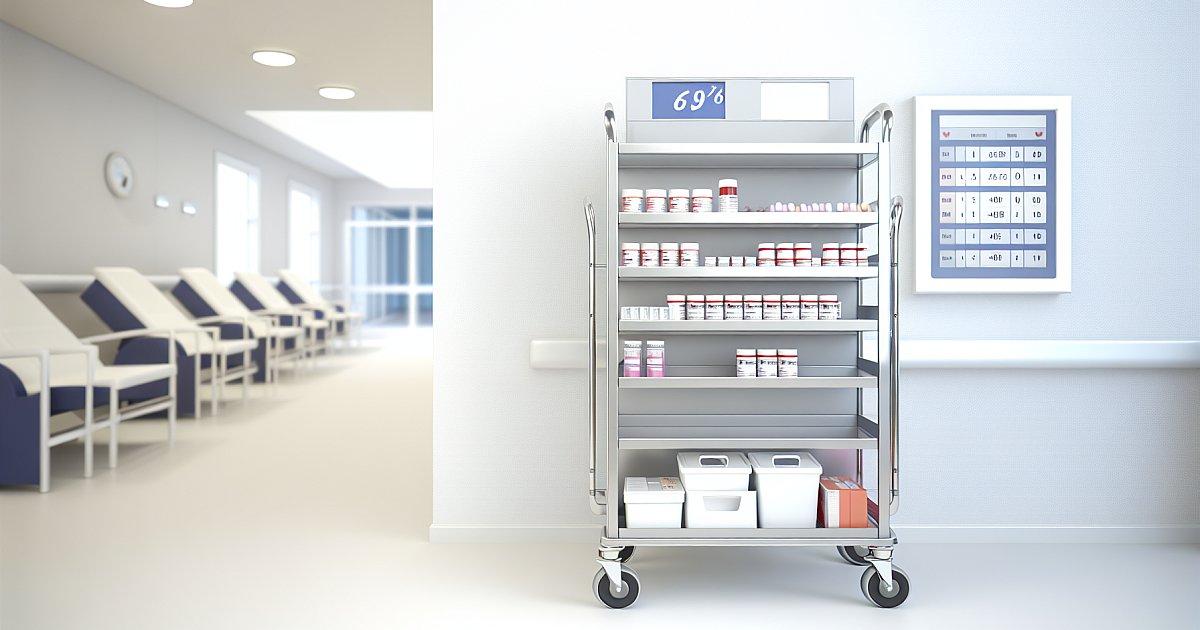
At Avir at Rose Trail, it wasn't.
A complaint inspection conducted on August 15, 2025 found that the facility failed to keep required emergency tracheostomy supplies at a resident's bedside. The resident had a tracheostomy, a surgically created airway opening in the throat that requires a tube to remain in place for breathing. When inspectors looked at what the facility had available in the event that tube came out, they found the emergency kit was incomplete.
The facility's own tracheostomy care policy, dated 2001, states plainly: a replacement tracheostomy tube must be available at the bedside at all times.
It wasn't there.
The respiratory therapist who works with the patient spelled out exactly why that gap matters. During an interview on the morning of the inspection, the therapist explained that a properly stocked bedside emergency kit should contain a tracheostomy tube the same size as the one currently inserted in the resident, a tracheostomy tube one size smaller, an ambu bag, and a suction catheter. That combination isn't arbitrary. When a tracheostomy tube is accidentally pulled out or falls out, a condition called decannulation, the same size tube often cannot be reinserted. The opening begins to close almost immediately. The smaller tube is what actually gets used.
The respiratory therapist said that in a life-or-death emergency, a tracheostomy tube one size smaller with its sterile packaging already opened could be used. The implication is that the facility had, at some point, an opened backup tube. Whether that tube was present and accessible at the time of the inspection, the report does not say. What the report does say is that the kit was not stocked as required.
The physician responsible for the resident's care acknowledged during the inspection that he was not sure of the facility's policy on emergency tracheostomy supplies. He told the surveyor to speak with the respiratory therapist about the importance of having the necessary supplies on hand. A physician uncertain of what emergency equipment should be at a tracheostomy patient's bedside, and deferring that question to someone else mid-inspection, is not a reassuring detail.
The respiratory therapist offered one piece of context that is worth sitting with carefully. Most tracheostomy patients, the therapist said, are able to breathe on their own without the tracheostomy tube in place, unless the tracheostomy is brand new. That distinction matters enormously at the individual patient level, and the inspection report does not specify where this resident fell on that spectrum. A patient who has had a tracheostomy for years and has some airway function without it is in a very different position than a patient whose surgical opening was made recently and whose airway depends entirely on that tube staying in place. The report does not tell us which situation applied here.
What the report does tell us is that the facility's own written policy, in place since 2001, required a replacement tube at the bedside at all times, and that standard was not being met.
The violation was cited at a level of minimal harm or potential for actual harm, affecting a small number of residents. That classification reflects the regulatory framework inspectors use to categorize what they find. It does not mean nothing could have happened. Minimal harm citations are assigned when the failure has not yet caused injury, not when the failure is trivial. A missing tracheostomy tube at a bedside is not trivial. It is the kind of gap that produces no consequences until the moment it produces catastrophic ones.
Tracheostomy care is among the higher-acuity nursing functions performed in long-term care settings. Residents who require it are typically medically complex, often dependent on the tube for reliable airway access, and unable to manage an emergency themselves. The entire architecture of safe tracheostomy management is built around the assumption that when something goes wrong, the right equipment is already present. Sending someone to find a tube after decannulation has occurred is not a workable plan.
The facility's tracheostomy care policy dates to 2001. That is twenty-four years during which the written standard required a replacement tube at the bedside at all times. The inspection found that standard was not being followed. Whether this was a recent lapse or a longer pattern is not something the report addresses. What the report captures is a single inspection, a single day, and a bedside kit that was not what it was supposed to be.
The physician's uncertainty about his own facility's policy on this point adds a layer to the picture. Tracheostomy management requires coordination between nursing staff, respiratory therapy, and the ordering physician. When the physician overseeing a tracheostomy patient's care cannot say what the emergency protocol requires, and directs an inspector to ask someone else, that coordination is not functioning the way it should.
The respiratory therapist, by contrast, was precise. Same size tube. One size smaller. Ambu bag. Suction catheter. Those four items are the standard emergency response kit. The therapist knew this without hesitation. The physician did not. The bedside kit was missing components. Those three facts, taken together, describe a facility where the person with the most clinical knowledge about tracheostomy emergencies was not the person whose authority shaped what ended up at the bedside.
Avir at Rose Trail is a nursing facility in Tyler, Texas. The complaint inspection on August 15, 2025 was the occasion that made this visible. The resident with the tracheostomy was there before the inspection, and was there during it, with an incomplete emergency kit at their bedside.
Whether they knew that, the report does not say.
Full Inspection Report
The details above represent a summary of key findings. View the complete inspection report for Avir At Rose Trail from 2025-08-15 including all violations, facility responses, and corrective action plans.
Additional Resources
Data source: This article is based on inspection data downloaded directly from the Centers for Medicare & Medicaid Services (CMS) via Medicare.gov. CMS releases inspection reports in bulk; we publish the findings as documented by state surveyors in the official Form CMS-2567 Statement of Deficiencies.
Plan of correction: The CMS report we receive does not include the facility's plan of correction. Facilities submit plans of correction separately to state survey agencies and those responses may not be reflected in CMS data at the time of publication. The absence of a plan of correction in our data does not mean one was not filed. Readers who want information about corrective steps taken are encouraged to contact the facility directly or their state survey agency.
Corrections may have occurred: Inspection reports reflect conditions observed on the date of the survey. Facilities may have implemented corrections, staffing changes, additional training, or other remediation since the report was issued. We report what CMS provides and encourage readers to seek current information from the facility.
Editorial process: Inspection findings are extracted from CMS source documents and synthesized using AI, reviewed for factual accuracy against the original report by our editorial team.
Corrections: We strive for accuracy in everything we publish. If you believe any fact in this article is incorrect, please contact us with details, and we will review and correct it promptly.
Professional review: All content reviewed by Christopher F. Nesbitt, Sr., NH EMT & BU-trained Paralegal.
Last verified: October 17, 2026 · Our methodology
Avir at Rose Trail in Tyler, TX was cited for violations during a health inspection on August 15, 2025.
At Avir at Rose Trail, it wasn't.
Health inspections identify deficiencies that facilities must correct. Violations range from minor documentation issues to serious safety concerns. Review the full report below for specific details and facility response.