Conway Healthcare and Rehabilitation: Medication Errors - AR
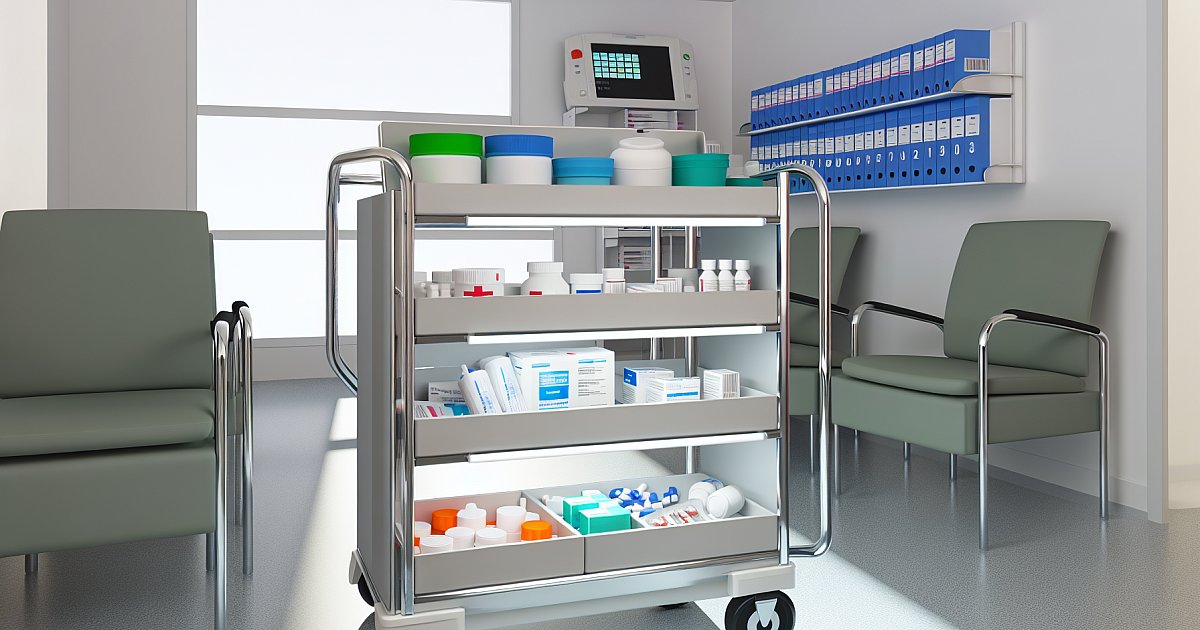
The citation fell under F0759, the federal standard requiring nursing homes to keep medication error rates below five percent. Cross that threshold and regulators take notice. Conway crossed it.
The inspectors documented no actual harm to residents. But the citation carries a specific finding: there was potential for more than minimal harm. That language matters. Medication errors in nursing homes run a wide spectrum. A missed blood pressure pill on a Monday morning is not the same as a doubled insulin dose on a diabetic resident. The inspection report does not distinguish between the two. It records a rate, and the rate was high enough to trigger federal action.
This was one of six deficiencies cited during the same inspection.
The visit itself was a complaint inspection, meaning someone had raised a concern before inspectors arrived. Complaint inspections are not routine sweeps. They begin with a specific allegation and expand from there. The medication error finding may or may not have been the subject of the original complaint. The report does not say.
Conway Healthcare and Rehabilitation Center reported a correction date of September 20, 2025, roughly a month after inspectors walked out the door. What the correction involved — retraining, a new pharmacist review process, changes to how nurses pull and administer medications — is not recorded in the citation. The deficiency is logged as isolated, meaning inspectors found it was not a widespread pattern across the facility. One pocket of the operation, not the whole of it.
That word, isolated, does not mean small. It means contained. The residents in that pocket were still exposed to whatever errors were occurring.
Medication administration in a nursing home is a layered process. A physician orders. A pharmacy fills. A nurse pulls the medication, verifies it against the order, and delivers it to the resident at the right time in the right amount by the right route. Each handoff is a chance for something to go wrong. Federal regulators require facilities to track their own error rates and keep them below five percent precisely because the chain is long and the residents receiving those medications are often elderly, medically complex, and unable to advocate for themselves when something is off.
The five percent threshold is not a target. It is a floor. A facility hitting exactly five percent is already in violation. Conway exceeded it.
Five of the other citations from the same August 21 inspection are not detailed in this report. What they covered, how serious they were, whether any involved the same residents affected by the medication errors — none of that is available here. What is available is the count: six deficiencies, one complaint inspection, one facility.
The facility has until September 20, 2025 to demonstrate it has fixed the problem. Whether that correction holds, whether the error rate drops and stays down, whether the residents who received incorrect medications during the period inspectors examined ever knew something had gone wrong — the inspection report does not follow up on any of that.
It records a moment. Inspectors came, found a medication error rate above the federal limit, noted the potential for harm, and filed the citation. Somewhere in Conway, Arkansas, residents were receiving medications administered by staff working inside a system that, on at least one stretch of days or weeks, was getting it wrong often enough to fail a federal standard.
The correction date has passed.
Full Inspection Report
The details above represent a summary of key findings. View the complete inspection report for Conway Healthcare and Rehabilitation Center from 2025-08-21 including all violations, facility responses, and corrective action plans.
Additional Resources
Data source: This article is based on inspection data downloaded directly from the Centers for Medicare & Medicaid Services (CMS) via Medicare.gov. CMS releases inspection reports in bulk; we publish the findings as documented by state surveyors in the official Form CMS-2567 Statement of Deficiencies.
Plan of correction: The CMS report we receive does not include the facility's plan of correction. Facilities submit plans of correction separately to state survey agencies and those responses may not be reflected in CMS data at the time of publication. The absence of a plan of correction in our data does not mean one was not filed. Readers who want information about corrective steps taken are encouraged to contact the facility directly or their state survey agency.
Corrections may have occurred: Inspection reports reflect conditions observed on the date of the survey. Facilities may have implemented corrections, staffing changes, additional training, or other remediation since the report was issued. We report what CMS provides and encourage readers to seek current information from the facility.
Editorial process: Inspection findings are extracted from CMS source documents and synthesized using AI, reviewed for factual accuracy against the original report by our editorial team.
Corrections: We strive for accuracy in everything we publish. If you believe any fact in this article is incorrect, please contact us with details, and we will review and correct it promptly.
Professional review: All content reviewed by Christopher F. Nesbitt, Sr., NH EMT & BU-trained Paralegal.
Last verified: October 13, 2026 · Our methodology
CONWAY HEALTHCARE AND REHABILITATION CENTER in CONWAY, AR was cited for violations during a health inspection on August 21, 2025.
The citation fell under F0759, the federal standard requiring nursing homes to keep medication error rates below five percent.
Health inspections identify deficiencies that facilities must correct. Violations range from minor documentation issues to serious safety concerns. Review the full report below for specific details and facility response.