Capstone Healthcare of Daingerfield: Abuse Violations - TX
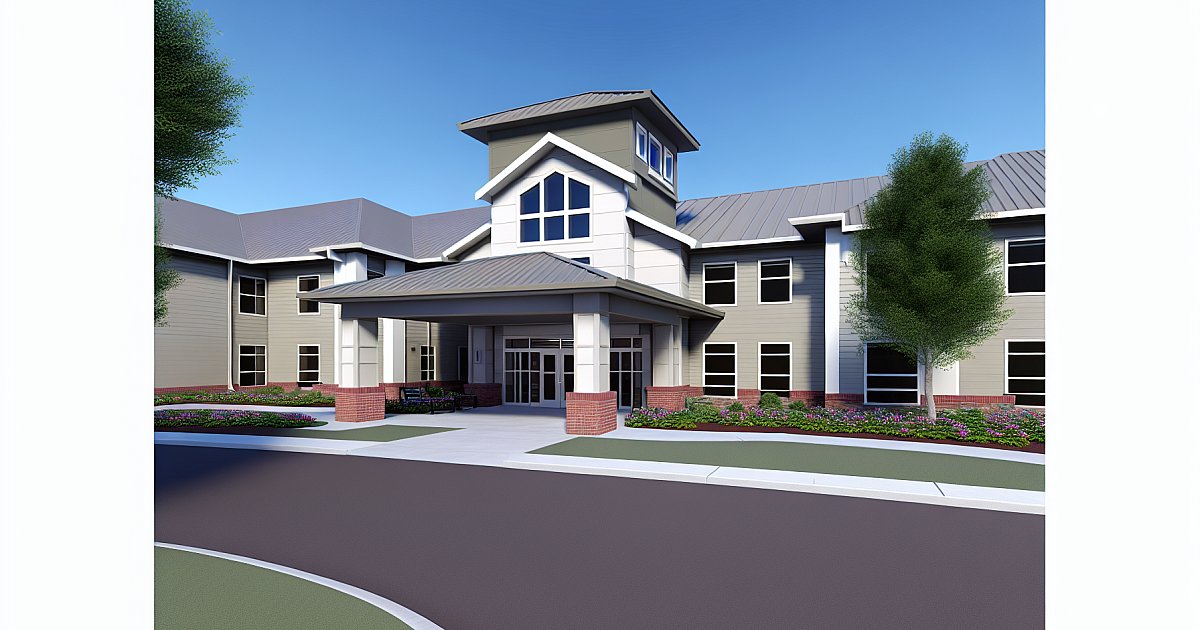
The finding, documented in a complaint inspection completed February 28, 2025, placed Capstone at the most serious level of federal deficiency. Immediate jeopardy is not a routine citation. It means inspectors concluded that residents inside the building were in danger at the moment inspectors were standing there.
The facility's response, and the pace of it, is at the center of what inspectors found.
Inspection records show that resident-to-resident altercations were among the incidents under review. The facility's own documentation described plans that included separating residents, placing them under one-to-one monitoring, removing them from environments where confrontations occurred, and notifying physicians immediately when behaviors escalated. Those are standard protective measures. What the record reflects is that, at the time inspectors arrived, those measures had not been fully implemented, and the corrective systems the facility said it had in place had not yet been evaluated for whether they were actually working.
The Medical Director, present during a meeting with inspectors, offered nothing substantive. He agreed, the report states, that the discussions were "thorough and will be effective." He made no relevant clinical comments. His role in protecting residents from ongoing harm is not described further in the record.
On the morning of February 28, inspectors conducted interviews with more than two dozen staff members, running from just before 10 in the morning until nearly noon. They spoke with the Director of Nursing, the Assistant Director of Nursing, the MDS Nurse, multiple licensed vocational nurses, certified nursing assistants, and medication aides from both the day shift and the overnight shift. They also interviewed the administrator, the dietary manager and assistant dietary manager, the housekeeping supervisor, the social worker, the maintenance supervisor, the director of business development, staff from medical records, a dietary aide, multiple housekeepers, the director of rehabilitation, a physical therapy assistant, an occupational therapist, and an activities assistant.
That list is worth pausing on. Inspectors did not interview a handful of nurses and move on. They worked through virtually every department in the building, from the people responsible for clinical decisions to the people responsible for cleaning the floors.
What those interviews revealed, according to the report, was that staff could correctly identify the categories of abuse, physical, sexual, and verbal, as well as resident-to-resident altercations. They could name who to notify if they suspected abuse: the abuse coordinator, the physician, the resident's family. They knew what proper documentation looked like. They could describe signs of escalating behavior, increased screaming and agitation, and they knew to notify a physician when those signs appeared. They could list de-escalation techniques: one-to-one monitoring, redirection, separation, removing a resident from the environment, calming music, involvement of social services.
In other words, the staff knew what to do. They could say it out loud to a federal inspector without hesitation.
The facility's problem was not that its employees lacked the vocabulary of resident protection. The problem was that knowing the right answers and actually executing them are not the same thing, and the inspection record reflects a gap between the two.
The immediate jeopardy finding was lifted at noon on February 28, after the facility demonstrated to inspectors that it had addressed the conditions creating the most serious danger. But the building did not leave the inspection in compliance. Inspectors kept a deficiency on the books after the immediate jeopardy was removed, citing the facility for harm with potential for more than minimal impact, classified as isolated in scope. The reason: the facility still needed to complete in-service training for staff and still needed to demonstrate that its corrective systems were actually working.
That is a specific and meaningful distinction. Immediate jeopardy removed means inspectors were satisfied that the acute crisis had been addressed. Remaining out of compliance means inspectors were not satisfied that the facility had fixed the underlying conditions well enough to prevent it from happening again.
The corrective plan the facility submitted described a sequence of steps: notifying physicians immediately when incidents occurred, placing interventions in the care plan right away, monitoring residents one-to-one when needed, separating residents involved in altercations, and working on de-escalation. The plan also referenced a commitment to recognizing signs of escalating behavior before incidents occur, not just responding after the fact.
What the plan does not address, because the inspection record does not address it, is the period between when incidents occurred and when those protective steps were actually taken. That gap, whatever its length, is what brought federal inspectors to Daingerfield in the first place. It is what produced the immediate jeopardy designation. And it is what the facility's corrective systems, as of February 28, had not yet demonstrated they could close.
Resident-to-resident altercations in nursing homes are not rare. Dementia, anxiety, and other cognitive and behavioral conditions are common among long-term care residents, and when people with those conditions share close quarters, conflict happens. What separates a facility that manages that reality from one that doesn't is not whether incidents occur. It is what the facility does in the hours and days before and after, whether it identifies which residents are at risk of harming others or being harmed, whether it puts barriers between them, whether it monitors, whether it tells the physician, whether it tells the family, and whether it updates the care plan so the next shift knows what the last shift learned.
The inspection record at Capstone describes a facility that, on paper, understood all of that. Its staff could recite it. Its administrator was informed at noon that the most serious federal designation had been lifted.
What the record does not describe is what the residents who were involved in those altercations experienced in the time before inspectors arrived, or what they were told about what happened to them, or whether the families of those residents were contacted as the facility's own plan said they should be.
The facility remained out of compliance at the close of the inspection. The in-service training had not been completed. The effectiveness of the corrective systems had not been evaluated. Both of those things were still pending when inspectors left the building.
Full Inspection Report
The details above represent a summary of key findings. View the complete inspection report for Capstone Healthcare of Daingerfield from 2025-02-28 including all violations, facility responses, and corrective action plans.
Additional Resources
Data source: This article is based on inspection data downloaded directly from the Centers for Medicare & Medicaid Services (CMS) via Medicare.gov. CMS releases inspection reports in bulk; we publish the findings as documented by state surveyors in the official Form CMS-2567 Statement of Deficiencies.
Plan of correction: The CMS report we receive does not include the facility's plan of correction. Facilities submit plans of correction separately to state survey agencies and those responses may not be reflected in CMS data at the time of publication. The absence of a plan of correction in our data does not mean one was not filed. Readers who want information about corrective steps taken are encouraged to contact the facility directly or their state survey agency.
Corrections may have occurred: Inspection reports reflect conditions observed on the date of the survey. Facilities may have implemented corrections, staffing changes, additional training, or other remediation since the report was issued. We report what CMS provides and encourage readers to seek current information from the facility.
Editorial process: Inspection findings are extracted from CMS source documents and synthesized using AI, reviewed for factual accuracy against the original report by our editorial team.
Corrections: We strive for accuracy in everything we publish. If you believe any fact in this article is incorrect, please contact us with details, and we will review and correct it promptly.
Professional review: All content reviewed by Christopher F. Nesbitt, Sr., NH EMT & BU-trained Paralegal.
Last verified: October 27, 2026 · Our methodology
Capstone Healthcare of Daingerfield in Daingerfield, TX was cited for abuse-related violations during a health inspection on February 28, 2025.
The finding, documented in a complaint inspection completed February 28, 2025, placed Capstone at the most serious level of federal deficiency.
Health inspections identify deficiencies that facilities must correct. Violations range from minor documentation issues to serious safety concerns. Review the full report below for specific details and facility response.