MA Assisted Living Facility Cited for Safety Violations Following Resident's Death in 99-Degree Room
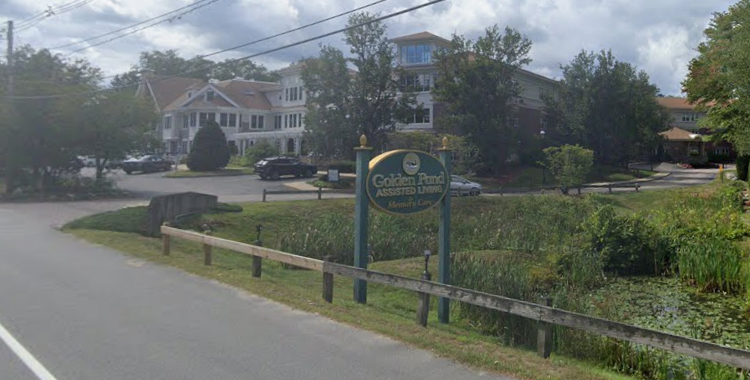
A year after a fire killed ten people at a different Massachusetts assisted living facility and forced a statewide safety overhaul, Golden Pond passed every state review put in front of it. Then the safety deadline arrived, and a resident was found dead in a room that had been 99 degrees for an unknown number of hours.
The Communities at Golden Pond, 50 West Main Street, Hopkinton, Mass. (Google Maps)
What's Been Reported
HOPKINTON, MASS. An 86-year-old woman died in a 99-degree apartment at The Communities at Golden Pond on September 30, and state regulators have since confirmed the assisted living facility was violating the exact safety rules Massachusetts rewrote after ten people burned to death in a different facility fourteen months earlier.
Sheila Szczypinski had lived at Golden Pond for seven weeks. She was last seen alive around 3:30 p.m. on September 29, after a supervised trip to Walmart and an afternoon event in the facility's function room. An aide found her dead the next morning while coming to help her bathe. Hopkinton Police Officer Noah Buentello, arriving at 9:55 a.m., "immediately observed that the room was uncomfortably hot," according to the incident report. The thermostat read 99 degrees. Firefighters opened windows to ventilate the unit. The building had switched from air conditioning to heat the day before.
Her son told investigators she "got confused easily" and may have turned her own heat up by accident, possibly reaching for what she thought was the cooling setting. Golden Pond's facilities manager gave police a similar theory.
The Executive Office of Aging and Independence, known as AGE, reviewed Golden Pond after her death. Inspectors found the facility missing its third-quarter fire and elopement drills. It had no automated external defibrillator on site. Its assisted living certificate wasn't posted. And the facility's staff communication log, AGE found, contained no entry about the heat conditions or what precautions, if any, staff were told to take during them.
MassLive first reported AGE's findings on October 10. CBS Boston, Boston.com, NBC Boston, Boston 25 News, and the Boston Globe have each covered pieces of the story since the death was discovered. The Middlesex District Attorney's Office and the Office of the Chief Medical Examiner are still determining Szczypinski's cause and manner of death; nothing about what killed her has been released.
What none of that coverage did was put this single death next to three years of Golden Pond's own regulatory record, or next to the statewide safety overhaul it was supposed to have already complied with.
The HVAC Dispute No One Has Resolved
Golden Pond's Director of Operations, Douglas Noble, gave CBS Boston the facility's official account: "Our HVAC system is professionally maintained by a licensed contractor on both a seasonal and as-needed basis and was working properly at the time of this incident."
Golden Pond employees, speaking to CBS Boston on condition of anonymity, described something else.
"It was so hot you couldn't breathe," one said.
Another described walking into residents' apartments that week: "It hit everyone in the face as you entered, you couldn't even — you had to keep going in and out of the apartment, it was so hot."
Staff said the problem wasn't confined to one confused resident's thermostat. They said they moved residents into common areas and ran portable air conditioners and fans because the building's system wasn't handling the switch from cooling to heat, and that as of October 1, two days after Szczypinski died, it still hadn't been repaired. That same day, Hopkinton Police Chief Scott van Raalten said, his officers returned to Golden Pond for an unrelated medical call. An officer, he said, again "observed that the temperatures in the rooms and building were unusually high."
Golden Pond's own director and Golden Pond's own employees are now on the record contradicting each other about whether the heat that killed, or didn't kill, a resident was a single malfunctioning thermostat or a building-wide failure. Nobody outside Golden Pond has resolved which account is accurate.
A Facility That Had Already Failed Twice
This was not Golden Pond's first encounter with state enforcement. It was its third attempt to get right the kind of basic operational requirements regulators are now scrutinizing nationally in the wake of Gabriel House.
In March 2023, a state compliance review found Golden Pond out of compliance across nine categories, according to the facility's own corrective action plan. Eleven residents lacked documentation confirming completion of required self-administered medication management checks. Some residents waited longer than ten minutes for responses to emergency calls. Audits found deficiencies in required hourly resident checks. Resident screening assessments were improperly completed. Service plans lacked documentation. Incident and accident reporting policies were non-compliant. Controlled substance management violated the facility's own narcotics disposal policy. New employees weren't completing required health screenings. Staff training requirements had lapsed.
The state barred Golden Pond from accepting new residents starting May 4, 2023. The facility's corrective action plan ran 17 pages and, according to the Hopkinton Independent's review of the document, contained numerous typos and grammatical errors. Facility leadership did not respond to the paper's inquiries about whether the corrective measures had actually been completed.
That June, while the admissions ban was still in effect, three Golden Pond residents died within a single week. One was James Noon, 84, a Marine Corps veteran who had spent his career as a neuroscience instructor and researcher at Harvard Medical School and had been married 52 years with five children. Noon went missing from the facility and was found two days later a short distance away, hidden in a bushy area near the building, according to the local fire chief. He was "conscious and alert" when rescued but was taken to a hospital and died four days later.
Then-executive director Michael Volpe attributed the compliance failures to the pandemic. "With all of our focus on the health and well-being of our residents and team members as we navigated through the pandemic, we were not always able to maintain all the regulatory requirements required for our certification as an assisted living community," he said, citing "COVID-19 protocols and unforeseen challenges in staffing and infection control."
A Second Suspension, a Dismissal, and a "Reboot"
Marc Cohen was hired as Golden Pond's executive director in August 2024, bringing 38 years of experience, 20 in hospital administration and 18 in senior living management at facilities in Milford, Framingham and Natick. He told a local reporter at the time that the facility's troubled history was behind it. "We are in the process of reinventing Golden Pond," Cohen said. "Clearly, we've had some issues in the past, but we're past those."
Five months later, on January 9, 2025, AGE suspended Golden Pond's certification a second time, citing noncompliance with service and service coordination requirements, emergency preparedness planning and reporting, recordkeeping, and staffing. An on-site review followed January 14; AGE issued its report January 24.
Cohen was on medical leave when the suspension hit. Chief Operating Officer Doug Noble was running the building's day-to-day operations at the time, and it was Noble who oversaw the corrective action plan submitted in early February. The suspension was lifted February 26, 2025, with Golden Pond required to submit monthly compliance documentation to the state through at least mid-2025.
Cohen, asked afterward about the suspension, told the Hopkinton Independent it wasn't the anomaly it might have appeared to be. "It's a much more common occurrence than people realize," he said. "AGE sent two others out on the same day. No one wants to publicize that."
On March 14, 2025, Cohen was dismissed. "On March 14, I learned that it was my last day at Golden Pond," he said. Noble took over as executive director and described the change as a full reset. "This is a reboot," Noble said. "I will build back Golden Pond's reputation brick by brick."
Golden Pond received a two-year reaccreditation from AGE that April. The following month, May 2025, AGE conducted another on-site review. It found no deficiencies.
Sixteen months after that clean review, a resident was dead in a room that had registered 99 degrees, in a building whose own employees say its heating and cooling system had failed, missing an automated external defibrillator the facility was legally required to have installed more than two months earlier.
The Fire That Rewrote the Rules Golden Pond Then Missed
Golden Pond's October 2026 violations didn't happen in a regulatory vacuum. They happened at the exact moment a new, statewide safety law, born out of the deadliest assisted living disaster in Massachusetts in roughly four decades, required facilities to comply or face penalties.
On July 13, 2025, a fire tore through Gabriel House, an assisted living facility in Fall River, killing ten residents. Investigators have not publicly confirmed a cause; the district attorney's office said the fire did not appear to be suspicious. Gabriel House had its own compliance history: an October 2023 state inspection found it out of compliance in staffing and emergency preparedness, among other categories, including gaps in resident safety and falls-prevention documentation, delayed reporting of incidents to the state, and missing staff health screenings. The facility filed a correction plan and continued operating on a certificate that remained valid past the date of the fire. Governor Maura Healey said the state "was not aware of any safety concerns at the facility" before ten people died there.
After the fire, Healey ordered every assisted living residence in Massachusetts, all 272 of them, to complete a fire and life safety self-assessment survey and submit site-specific emergency preparedness plans. Every facility responded. Thirty-six residences, 13 percent, flagged their own fire drills, mutual aid agreements, or emergency coordination protocols as needing improvement. Those 36 were ordered to submit corrective action plans within 45 days and undergo targeted compliance reviews examining training logs and drill performance. A further 69 percent of facilities, 189 of them, flagged at least one other fire or building safety gap, from missing kitchen hood extinguishers to inadequate fire-rated walls.
"The Gabriel House fire was a terrible tragedy," Healey said when the survey results were released. "It's on all of us to do everything we can to enhance the safety of all residents and staff" across the state's assisted living residences.
New regulations followed, finalized in July 2026: mandatory automated external defibrillators, naloxone, and epinephrine on site, with CPR- and AED-certified staff available at all times; quarterly fire drills and annual simulated evacuation exercises on every shift; annual fire inspections and annual sign-off from local fire departments, boards of health, and building inspectors; public disclosure of owner violation histories, including Medicaid and Medicare fraud and court settlements; and financial penalties of $500 per day for violations, rising to $1,000 per day for providing medical services without proper certification.
State Senator Mark Montigny, a Democrat from New Bedford who pushed for the reforms, said the political dynamic around assisted living oversight "completely changed, favorably, because of the tragic situation." Elder law attorney Kathleen Lynch Moncata argued the expanded medical responsibilities facilities had taken on justified the new scrutiny: "Once we've crossed over into providing medical services," she said, "then there has to be increased accountability." The industry pushed back on cost. LeadingAge Massachusetts President Elissa Sherman warned that "increased operating costs will need to be passed on to residents."
The regulations took effect July 31, 2026. Facilities were given 60 days to come into compliance, a window that closed September 30, 2026. Sheila Szczypinski was found dead that same day, in a facility that, according to AGE's own review less than two weeks later, had neither the defibrillator nor the completed drills the new law required.
An Independently Owned Facility, Not a Chain
Golden Pond is owned by Golden Pond Resident Care Corp, a company controlled by Larry and Kerry Kunst, who bought the land on West Main Street more than three decades ago and built the facility in 1993. It is not part of a national or regional chain. A review of corporate records, industry association listings, and the backgrounds of Golden Pond's recent executive directors found no evidence that the Kunsts or Golden Pond Resident Care Corp own or operate any other assisted living facility in Massachusetts or elsewhere. Whatever has gone wrong at Golden Pond over the past three years, it has gone wrong at one building, under one continuous ownership, through four different executive directors.
A Gap in the Public Record
Golden Pond is an assisted living residence, licensed and regulated by AGE at the state level. It is not a skilled nursing facility, and it is not part of the federal Centers for Medicare and Medicaid Services oversight system that covers the nation's roughly 15,000 nursing homes, the same system NursingHomeNews.org draws its facility data from for every other article on this site. There is no five-star federal rating for Golden Pond. There is no searchable national deficiency database listing its citations next to those of every other facility in the country. There is no single public page where a family researching Golden Pond before move-in could have found the 2023 admissions ban, the three deaths that followed it that summer, the January 2025 suspension, and the clean review four months later, all sitting next to each other.
Assembling that record for this story meant going through years of a hyperlocal newspaper's archive, one article at a time. For a facility now more than a year past its most recent "no deficiencies" finding, and days past a second resident's death under state investigation, that gap in public visibility is not a side note. It is a big part of why this kept happening without most of the families choosing Golden Pond ever knowing.
Summary
Golden Pond failed a state compliance review in March 2023 and was barred from taking new residents. Three residents died within one week that June. The facility was eventually allowed to resume admissions. A new executive director said in August 2024 that its problems were in the past. Five months later, the state suspended its certification again. That director was dismissed in March 2025. His successor called it a reboot. Two months after that, state inspectors found no deficiencies at all, and the facility was reaccredited for two years.
Sixteen months later, on the same day a statewide grace period for post-Gabriel-House-fire safety compliance expired, an 86-year-old woman was found dead in a 99-degree room. The facility did not have the defibrillator the new law required. It had not completed the fire drills the new law required. Its own director says the building's heating and cooling system worked properly that week. Its own employees say it did not.
Nobody from Golden Pond has said who was supervising the building the night the temperature climbed, or why a facility reaccredited with zero deficiencies in May 2025 was, by October 2026, missing requirements that had been law for more than two months. Douglas Noble answered for the HVAC system. No one has answered for the rest.
The Middlesex District Attorney's Office and the Office of the Chief Medical Examiner have not released a cause of death. This story will be updated as that investigation produces findings.
Sources: MassLive (Irene Rotondo) · CBS Boston/WBZ (Kristina Rex) · The Hopkinton Independent (multiple articles, 2023–2025) · Boston.com · NBC Boston · Boston 25 News · The Boston Globe · Insurance Journal's reporting of Massachusetts Executive Office of Aging and Independence survey results · Massachusetts Executive Office of Aging and Independence compliance review records as reported by the Hopkinton Independent.
Sources: This article is based on original news reporting from the outlets linked above, public state regulatory records, and official government statements. It does not use CMS inspection data; this facility is not a CMS-certified skilled nursing facility.
Editorial process: Reported and synthesized from the named sources using AI, with every factual claim attributed to the outlet or record that reported it, reviewed by our editorial team.
Corrections: We strive for accuracy in everything we publish. If you believe any fact in this article is incorrect, please contact us with details, and we will review and correct it promptly.
Professional review: All content reviewed by Christopher F. Nesbitt, Sr., NH EMT & BU-trained Paralegal.
Last verified: October 11, 2026 · Our methodology