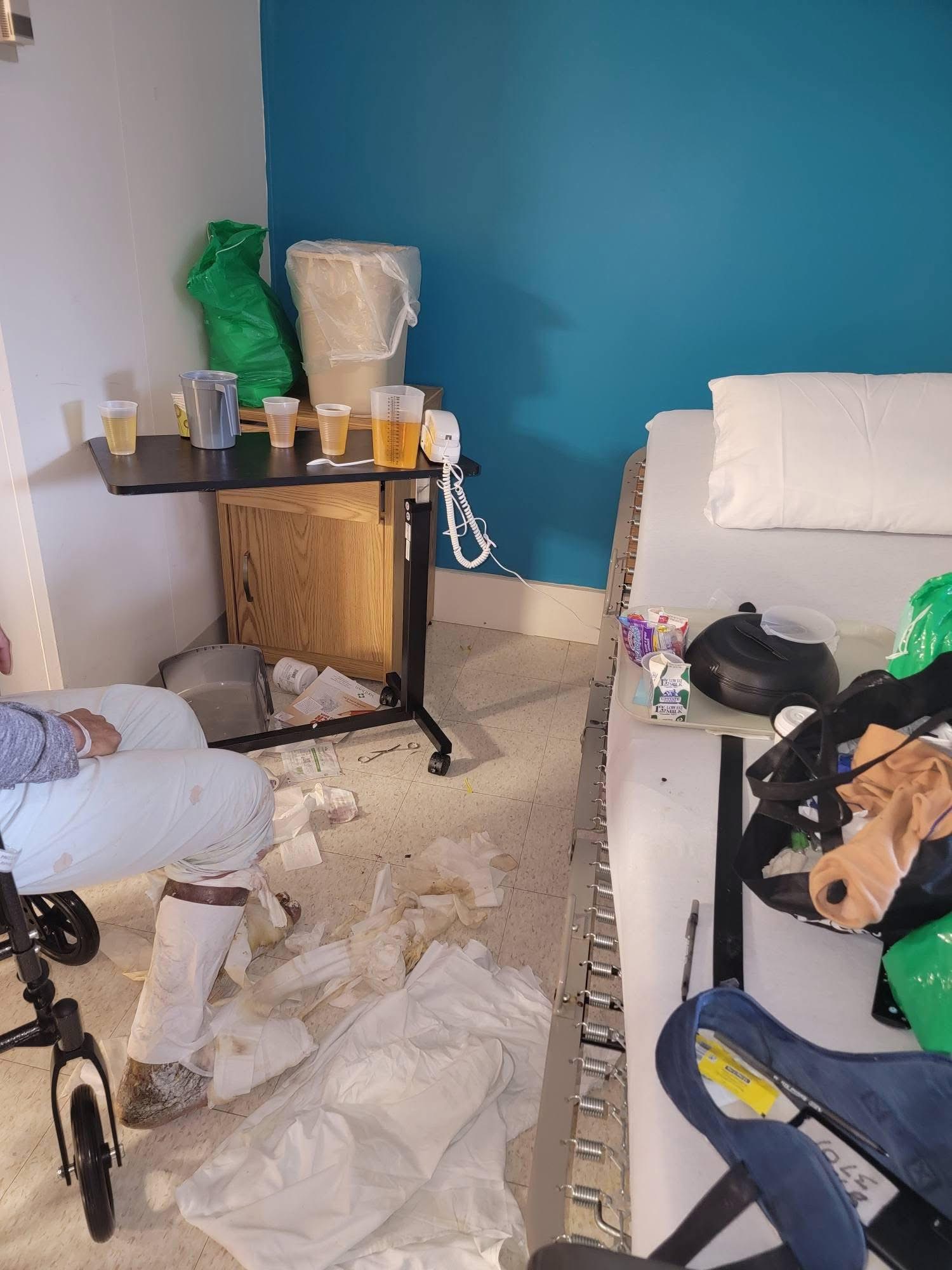
Federal inspectors found no evidence that licensed nurses properly evaluated the resident's right buttock wound between March 16 and April 14, even as the ulcer fluctuated between open and closed states during that period.

The resident, identified as R5 in inspection records, had an Allevyn dressing applied to an intact wound on March 16. By March 23, the right buttock had opened and required cleaning before a new dressing was applied. The wound appeared closed again by March 30, though nurses still applied a protective dressing.
On April 5, the wound had reopened and needed cleaning and a fresh dressing. The following day, nurses noted the dressing remained intact. By April 13, the protective covering was still in place and undisturbed.
But on April 14, when inspectors observed the wound treatment alongside a registered nurse, they discovered a stage 2 pressure ulcer measuring 1 centimeter by 0.7 centimeters. The wound tissue appeared pink, while surrounding skin showed dark discoloration indicating potential tissue damage.
The registered nurse cleaned the area and applied a new Allevyn dressing during the inspector's observation. However, inspection records revealed no documentation that nurses had been measuring the wound or assessing its characteristics during the preceding weeks.
When questioned about the missing assessments, a registered nurse identified as RN-B confirmed on April 14 that staff should have been following treatment orders requiring weekly wound evaluation and measurement. She told inspectors she was "unsure why this was not being completed."
The facility's administrator, interviewed the following day, said she would expect licensed nurses to follow the facility's wound monitoring policy. She confirmed that proper assessment and documentation should have occurred throughout the treatment period.
Divine Providence's own pressure ulcer policy, dating to April 2017, explicitly requires that pressure ulcers be evaluated and measured weekly. The policy mandates that wound characteristics be documented to determine whether the injury is worsening, remaining stable, or showing improvement.
The inspection found that nurses had been applying and changing dressings according to the treatment plan. They documented when wounds appeared open or closed and noted when dressings remained intact between changes. But they failed to perform the systematic weekly assessments that would have tracked the wound's progression and informed treatment decisions.
Stage 2 pressure ulcers involve partial thickness skin loss and can appear as shallow open wounds or intact blisters. Without proper monitoring, these injuries can worsen into deeper, more serious wounds that are harder to heal and pose greater infection risks.
The wound's fluctuating condition between March and April highlighted the importance of consistent monitoring. The ulcer alternated between open and closed states multiple times, changes that should have been documented and measured to guide care decisions.
Federal inspectors classified the violation as causing minimal harm or potential for actual harm to few residents. The finding indicates that while the monitoring failure didn't cause immediate serious injury, it represented a breakdown in basic wound care protocols that could have led to complications.
The case illustrates how seemingly routine documentation requirements serve critical patient safety functions. Weekly wound assessments allow nurses to detect early signs of infection, measure healing progress, and adjust treatment plans when wounds aren't responding as expected.
Without this systematic monitoring, caregivers lose crucial information needed to prevent minor wounds from becoming serious medical complications. The resident's wound ultimately measured less than a centimeter across, but the weeks of inadequate assessment represented a missed opportunity to ensure optimal healing and prevent deterioration.
The inspection occurred on April 15, with inspectors documenting their findings after observing the delayed wound assessment and interviewing staff about the monitoring failures.
Full Inspection Report
The details above represent a summary of key findings. View the complete inspection report for Divine Providence Community Home from 2026-04-15 including all violations, facility responses, and corrective action plans.
Additional Resources
- View all inspection reports for Divine Providence Community Home
- Browse all MN nursing home inspections