Lone Star Ranch Rehab: Abuse Prohibition Violation - TX
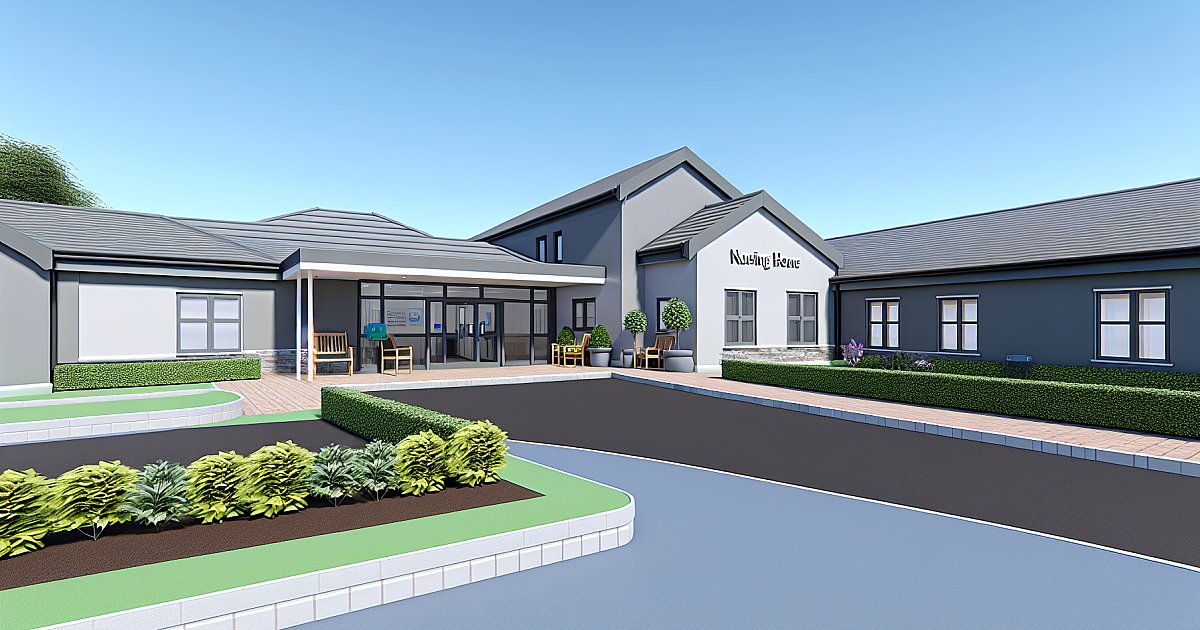
Except inspectors found enough to cite the facility anyway.
Federal surveyors visited the Kingsville facility on December 29, 2025, responding to a complaint. What they documented was a deficiency under F0600, the federal tag that governs a nursing home's obligation to protect residents from abuse. The level of harm was classified as minimal harm or potential for actual harm. Few residents were listed as affected. By the standards of federal nursing home enforcement, this was not the most serious citation a facility can receive. It was not an Immediate Jeopardy finding. No one was recorded as having suffered a documented physical injury that inspectors could point to and photograph.
But the resident at the center of the complaint was pleasantly confused. That detail matters more than it might first appear.
When a nursing home resident has the cognitive capacity to clearly describe what happened to her, investigators have a starting point. They can take a statement. They can compare it against staff accounts, against incident logs, against whatever the facility recorded in the hours and days after something went wrong. When a resident is pleasantly confused, that starting point disappears. She cannot fill in what the facility left blank. She cannot contradict a staff member's version of events. She cannot tell anyone whether she was frightened, whether she was hurt, whether someone did something to her that she has since lost the words to describe.
That is precisely the population that abuse policies are designed to protect most fiercely. And it is precisely the population for which failures in investigation and oversight carry consequences that never fully surface.
Lone Star Ranch's own Abuse Prohibition Policy, revised in October 2022, states that each resident has the right to be free from abuse, mistreatment, neglect, corporal punishment, involuntary seclusion, and financial abuse. The policy defines abuse as the willful infliction of injury, withholding or misappropriating property or money, unreasonable confinement, intimidation, or punishment with resulting physical harm, pain, or mental anguish.
Those words are not unusual. Nearly every nursing home in the country has a policy that reads something like them. The question inspectors ask is not whether the policy exists. It is whether the facility acted as though it did.
The inspection report does not specify what the original complaint alleged. It does not name the resident. It does not describe what staff said they did or did not do in response to whatever incident prompted the complaint. The narrative is spare, as CMS deficiency statements often are, built from fragments: a resident interview, a records review, a policy citation. What surveyors concluded, based on those fragments, was that the facility had fallen short of its obligation under federal rules to protect residents from abuse.
Lone Star Ranch sits on General Cavazos Boulevard in Kingsville, a small South Texas city of roughly 25,000 people, home to Texas A&M University-Kingsville and a significant military presence from the nearby Naval Air Station. The facility serves a community where long-term care options are limited and families often have few alternatives when a parent or spouse can no longer be cared for at home. That context does not excuse a deficiency. It does explain why citations at facilities in smaller, more isolated communities carry a particular weight. There is not always somewhere else to go.
The woman at the center of this inspection had no memory of an altercation to share with surveyors. What the inspection record reflects is that something happened, or was alleged to have happened, involving her and possibly other residents, and that the facility's response to that something was found to be deficient. The specific nature of that deficiency, whether it was a failure to investigate promptly, a failure to report, a failure to separate residents involved in an incident, or something else entirely, is not spelled out in the portion of the report available here.
What is spelled out is the policy the facility wrote for itself and the standard it failed to meet.
There is a particular cruelty in the gap between a written policy and its application to a resident who cannot remember what was done to her. The policy uses the word willful. Abuse, by that definition, requires intent. But neglect of an investigation, a slow response, a decision not to look too closely at what might have happened to a woman who cannot clearly say what she experienced, none of that requires intent to cause harm. It only requires the ordinary institutional tendency to move on.
Nursing homes that serve residents with cognitive impairment bear a heightened responsibility for exactly this reason. A resident who is pleasantly confused is not a resident who is unaffected by what happens to her. She may not be able to narrate her own experience to a surveyor weeks later. That does not mean she did not experience it.
The December 2025 inspection at Lone Star Ranch was a complaint survey, meaning someone, a family member, a staff member, an ombudsman, or the resident herself in a moment of clarity, contacted regulators and said something was wrong. Complaint surveys are triggered by specific allegations. They are not routine check-ins. Someone made a call or filed a report because they believed a resident had not been protected.
Inspectors came. They interviewed the resident, who was pleasantly confused and remembered nothing. They reviewed records. They looked at the facility's own policy. And they left with a citation.
The facility's plan of correction is not included in the available report. Whether Lone Star Ranch acknowledged the deficiency, disputed the finding, or committed to specific changes in how it responds to incidents involving cognitively impaired residents is not reflected in what was provided to inspectors.
What remains is the image of a woman sitting across from a surveyor, pleasant, confused, unable to remember any incident or altercation, unable to say whether something had been done to her, unable to give investigators the account that might have made the record clearer. The facility had a policy that promised to protect her. Inspectors found that promise had not been kept.
She could not tell them what she had lost. That is the part of the record that does not get corrected.
Full Inspection Report
The details above represent a summary of key findings. View the complete inspection report for Lone Star Ranch Rehabilitaion and Healthcare Cente from 2025-12-29 including all violations, facility responses, and corrective action plans.
Additional Resources
Data source: This article is based on inspection data downloaded directly from the Centers for Medicare & Medicaid Services (CMS) via Medicare.gov. CMS releases inspection reports in bulk; we publish the findings as documented by state surveyors in the official Form CMS-2567 Statement of Deficiencies.
Plan of correction: The CMS report we receive does not include the facility's plan of correction. Facilities submit plans of correction separately to state survey agencies and those responses may not be reflected in CMS data at the time of publication. The absence of a plan of correction in our data does not mean one was not filed. Readers who want information about corrective steps taken are encouraged to contact the facility directly or their state survey agency.
Corrections may have occurred: Inspection reports reflect conditions observed on the date of the survey. Facilities may have implemented corrections, staffing changes, additional training, or other remediation since the report was issued. We report what CMS provides and encourage readers to seek current information from the facility.
Editorial process: Inspection findings are extracted from CMS source documents and synthesized using AI, reviewed for factual accuracy against the original report by our editorial team.
Corrections: We strive for accuracy in everything we publish. If you believe any fact in this article is incorrect, please contact us with details, and we will review and correct it promptly.
Professional review: All content reviewed by Christopher F. Nesbitt, Sr., NH EMT & BU-trained Paralegal.
Last verified: October 27, 2026 · Our methodology
Lone Star Ranch Rehabilitation and Healthcare Cent in Kingsville, TX was cited for abuse-related violations during a health inspection on December 29, 2025.
Except inspectors found enough to cite the facility anyway.
Health inspections identify deficiencies that facilities must correct. Violations range from minor documentation issues to serious safety concerns. Review the full report below for specific details and facility response.