Mary Gran Nursing Center: Immediate Jeopardy Violation - NC
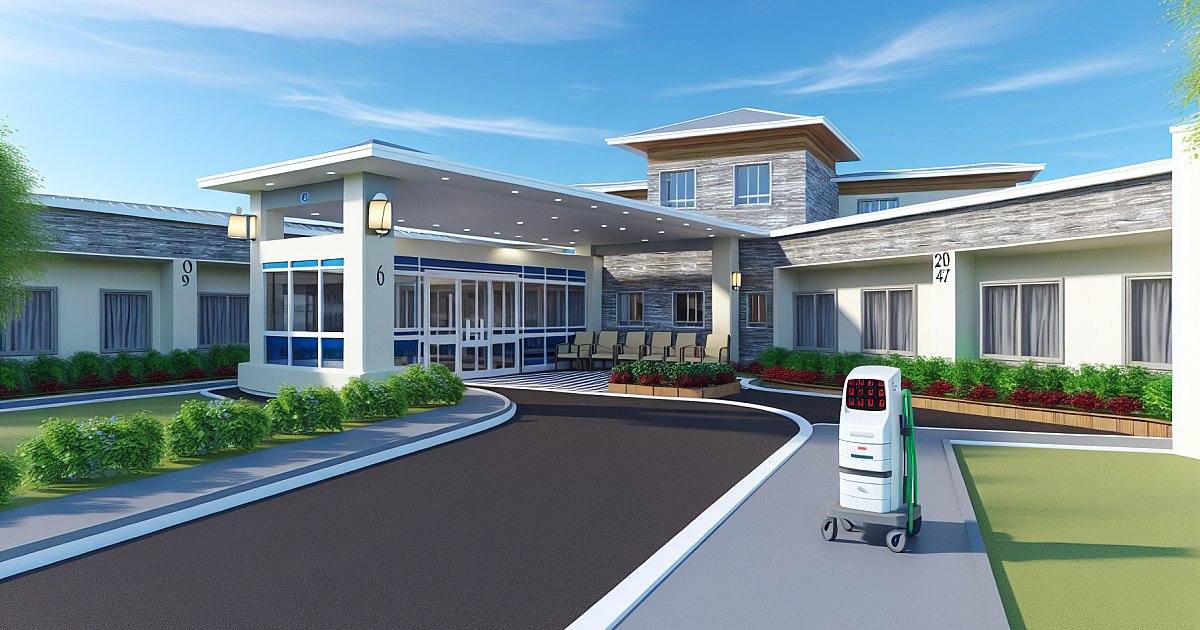
Federal health inspectors cited the facility on August 14, 2025 for an immediate jeopardy violation, the most serious classification the government assigns, after finding that staff failed to promptly notify residents, their physicians, and family members when situations arose that affected the resident's health or safety. The deficiency fell under a category the government labels Resident Rights, a designation that signals this wasn't a clinical error buried in a chart. It was a failure to communicate, repeated and serious enough that inspectors determined it placed at least one resident in immediate danger.
Immediate jeopardy is not a finding inspectors assign loosely. It means the violation caused, or was likely to cause, serious injury, harm, impairment, or death. It is the threshold that triggers the government's most urgent response. Of the eight deficiencies cited at Mary Gran during the August inspection, this was the one that crossed that line.
The inspection was a complaint survey, meaning someone had already raised concerns before inspectors walked through the door.
The specific regulatory requirement the facility violated, known in federal oversight as F0580, exists for a straightforward reason. Nursing home residents are among the most vulnerable people in any community. Many cannot advocate for themselves. Many cannot describe pain accurately, or notice that a wound is worsening, or understand that a new medication is causing a reaction. The people who know them best, the family members who visited every Sunday, the daughter who knows her mother's normal, the son who can tell when something is off, are not there around the clock. The rule requiring prompt notification is designed to close that gap. When something changes, the people who care most about the resident are supposed to be told immediately, so they can ask questions, push for answers, demand a doctor's attention, or simply be present.
At Mary Gran, that wasn't happening at a level that inspectors classified as an immediate threat to at least one person's life or safety.
What the inspection report does not say is equally significant. It does not name the resident or residents involved. It does not describe the specific injury, decline, or situation that went unreported. It does not say how long the failure continued before someone complained, or how many people were affected, or what the outcome was for the resident at the center of the immediate jeopardy finding. The public record is, in that sense, a door that opens only partway. The government confirms something serious happened. It does not say what.
That opacity is not unusual. Federal inspection reports frequently identify the category of a violation without publishing the underlying case details, particularly in complaint-driven surveys where the identity of the complainant and the resident may be protected. What remains visible is the severity classification itself, and in this instance, that classification is unambiguous.
The facility reported a correction date of September 1, 2025, eighteen days after inspectors documented the violation. Whether the correction addressed the specific circumstances of the immediate jeopardy finding, or whether it involved broader changes to the facility's notification protocols, the inspection record does not specify.
Mary Gran Nursing Center is a long-term care facility in Sampson County, a rural part of eastern North Carolina where access to healthcare is limited and nursing home beds represent a critical resource for elderly residents who have few alternatives nearby. For families in communities like Clinton, placing a loved one in a nursing home often means trusting an institution to act as the eyes and ears they cannot be themselves. That trust depends, in part, on a single expectation: if something happens, someone will call.
The August inspection found eight deficiencies in total, a number that by itself indicates a facility with multiple areas requiring attention from regulators. The immediate jeopardy finding was the most severe. The other seven deficiencies, cited at lower severity levels, covered additional areas of care and operations that inspectors found lacking. The report does not describe those findings in detail within the narrative available for this article.
Immediate jeopardy violations carry potential consequences that extend beyond a citation. Facilities that fail to correct immediate jeopardy findings face the possibility of federal fines, denial of new admissions, and in the most serious cases, termination from the Medicare and Medicaid programs, a financial consequence that would effectively end a facility's operation. The fact that Mary Gran reported a correction within eighteen days suggests the facility moved quickly once the finding was documented, though the government's verification of that correction is a separate process from the facility's own declaration.
The notification requirement that Mary Gran violated is one of the foundational protections written into nursing home law precisely because the history of long-term care is filled with cases where residents were harmed and families found out too late. Too late to ask a doctor the right question. Too late to transfer a loved one before a condition became irreversible. Too late to simply sit beside someone who was frightened and in pain and didn't know why no one had come.
The inspection report does not say whether any of that happened at Mary Gran in August 2025. It says the facility failed to meet the standard that is supposed to prevent it, and that the failure was serious enough to constitute an immediate threat.
Somewhere in Clinton, there is at least one family that may not have known what was happening to someone they loved inside that building. The inspection record confirms the gap existed. It does not say how wide it was, or what fell through it.
Full Inspection Report
The details above represent a summary of key findings. View the complete inspection report for Mary Gran Nursing Center from 2025-08-14 including all violations, facility responses, and corrective action plans.
Additional Resources
Data source: This article is based on inspection data downloaded directly from the Centers for Medicare & Medicaid Services (CMS) via Medicare.gov. CMS releases inspection reports in bulk; we publish the findings as documented by state surveyors in the official Form CMS-2567 Statement of Deficiencies.
Plan of correction: The CMS report we receive does not include the facility's plan of correction. Facilities submit plans of correction separately to state survey agencies and those responses may not be reflected in CMS data at the time of publication. The absence of a plan of correction in our data does not mean one was not filed. Readers who want information about corrective steps taken are encouraged to contact the facility directly or their state survey agency.
Corrections may have occurred: Inspection reports reflect conditions observed on the date of the survey. Facilities may have implemented corrections, staffing changes, additional training, or other remediation since the report was issued. We report what CMS provides and encourage readers to seek current information from the facility.
Editorial process: Inspection findings are extracted from CMS source documents and synthesized using AI, reviewed for factual accuracy against the original report by our editorial team.
Corrections: We strive for accuracy in everything we publish. If you believe any fact in this article is incorrect, please contact us with details, and we will review and correct it promptly.
Professional review: All content reviewed by Christopher F. Nesbitt, Sr., NH EMT & BU-trained Paralegal.
Last verified: October 20, 2026 · Our methodology
Mary Gran Nursing Center in Clinton, NC was cited for immediate jeopardy violations during a health inspection on August 14, 2025.
The deficiency fell under a category the government labels Resident Rights, a designation that signals this wasn't a clinical error buried in a chart.
Health inspections identify deficiencies that facilities must correct. Violations range from minor documentation issues to serious safety concerns. Review the full report below for specific details and facility response.