Courtyard Health and Rehabilitation: Elopement Jeopardy - MS
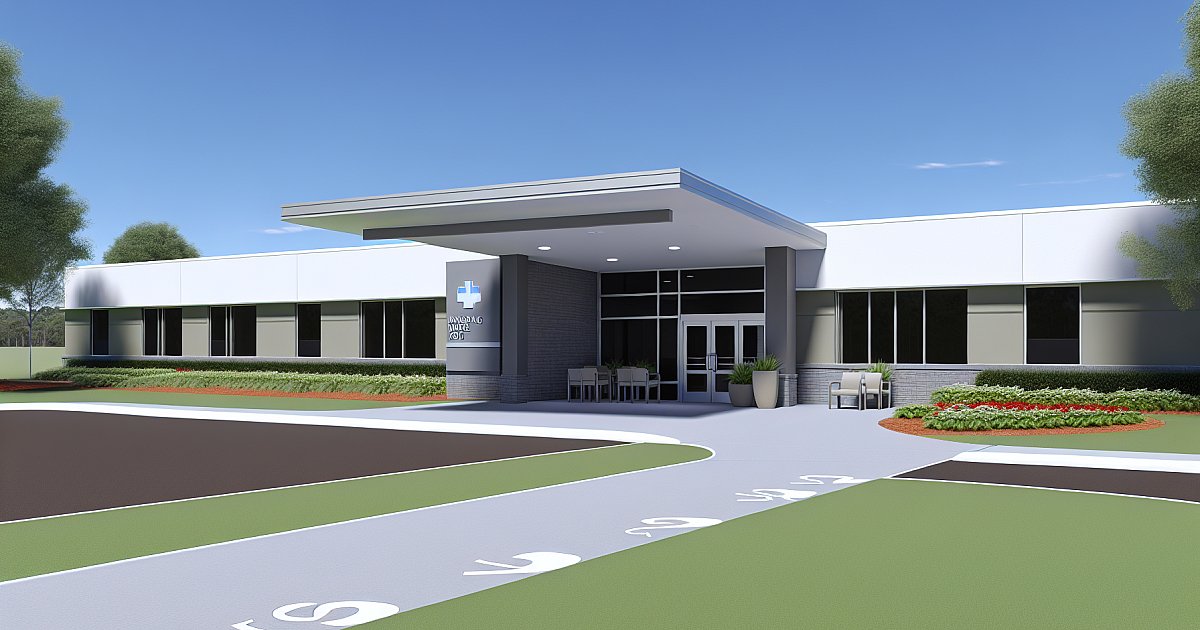
The inspection, filed August 13, 2025, traced the elopement to a single moment: a visitor entering the building, a door that didn't fully close, and a resident who was on the other side of it. The resident left.
Elopement, in the language of nursing home regulation, means a resident has left the facility unsupervised and without staff awareness. For residents with dementia or other cognitive impairments, it is one of the most dangerous things that can happen. They may not know where they are. They may not be able to ask for help. They may walk into traffic, wander into heat or cold, or simply not be found in time. The inspection report does not describe what happened to Resident #1 after they exited, how long they were outside, where they went, or what condition they were in when located. It does not say whether Resident #1 was found quickly or after a prolonged search. It does not say whether they were injured.
What it says is that the door didn't close.
The facility's own root cause analysis, conducted in the days following the incident, reached the same conclusion the inspection report records: Resident #1 exited when a visitor was entering. That is a finding that points not toward any single employee's failure but toward a system that depended entirely on every person who passed through the door to close it completely, every time. Visitors to nursing facilities are not trained. They are not staff. They may be elderly themselves, managing a coat and a purse and the emotional weight of visiting someone they love. A policy that relies on them to maintain the security perimeter is a policy built on something that will eventually give way.
The inspection report identifies the staff members who participated in the root cause analysis: the Team Manager, the Maintenance Supervisor, a Licensed Practical Nurse identified as LPN #1, a Medical Records Clerk, and the Infection Preventionist. That is a notable list. A maintenance supervisor's presence suggests the facility was also examining the door itself, its hardware, its closing mechanism, whether it functioned as it was supposed to. A medical records clerk's presence suggests the facility was reviewing documentation. What the root cause analysis actually concluded beyond identifying the visitor as the proximate cause is not reflected in the inspection report.
The corrective actions the facility says it took moved quickly. On August 7 and August 8, two days after the elopement, the Director of Clinical Services conducted mandatory in-service training for all employees. The training covered the facility's elopement policy, the procedure for responding to a missing resident, and, specifically, the importance of ensuring doors fully close when visitors enter or exit. The facility described the training as 100 percent mandatory and said all future employees would receive the same training before taking any assignment.
The facility declared that all corrective actions were complete as of August 8, 2025. It declared that immediate jeopardy was removed as of August 9, 2025. State inspectors did not arrive until August 11, 2025, two days after the facility said the crisis had been resolved. When they did arrive, and again on August 13, they reviewed observations, interviews, and records and concluded the facility's account was accurate. The immediate jeopardy finding was validated as having been removed before the state agency walked in.
That timeline matters for what it reveals about how nursing home oversight works in practice. The most serious finding federal inspectors can make, immediate jeopardy, was triggered by an event that occurred sometime before August 7. The facility conducted its own investigation, identified its own root cause, trained its own staff, and declared the problem resolved, all before a single state inspector set foot in the building. The state's role, when it arrived, was to confirm what the facility had already said about itself.
The inspection report does not say when the elopement occurred. It does not give a date for the incident that started all of this. It does not describe how Resident #1 was found, whether the resident was harmed, or what the resident's condition was. It does not name the visitor who held the door. It does not describe the door, its location in the facility, or whether it had an alarm. It does not say whether the alarm, if there was one, sounded. It does not say whether staff were positioned near the entrance at the time of the incident.
What the report does say is that the root cause was a visitor entering.
Nursing home elopements are not rare events. They are a known and studied risk, most heavily concentrated among residents with Alzheimer's disease and other forms of dementia. Facilities are required to assess each resident's elopement risk and to have systems in place to prevent unauthorized exits. Those systems typically include alarmed doors, coded keypads, wander-guard bracelets that trigger alerts when a resident approaches an exit, and staff positioning near entry and exit points. The inspection report does not describe which of these systems Courtyard Health and Rehabilitation had in place on the day Resident #1 walked out. It does not say which systems, if any, failed. It does not say whether any alarm sounded and was ignored, or whether no alarm sounded at all.
The corrective action the facility emphasizes in its report is education. Train the staff. Remind them to watch the door. Tell visitors to make sure it closes. Education is the most common corrective action in nursing home inspection reports, and it is also the one most dependent on the assumption that the problem was one of knowledge rather than one of structure. If a staff member didn't know to watch the door, training fixes that. If the door had a broken closer, training does not fix that. If the facility's staffing levels made it impossible for anyone to be stationed near the entrance at all times, training does not fix that either.
The inspection report does not say which of those things was true at Courtyard Health and Rehabilitation on the day Resident #1 walked out.
What it says is that the door didn't fully close, and that a resident who was not supposed to leave walked through it.
The facility is in McComb, a city of roughly 12,000 people in Pike County in southwest Mississippi. The inspection was a complaint inspection, meaning someone reported a concern to the state agency that prompted the visit. The complaint that triggered the inspection is not described in the report.
Resident #1 is not named. Their age is not given. Whether they were found on the sidewalk outside the building, or a block away, or further, is not in the report. Whether it was hot that day in McComb, and August in Mississippi is reliably brutal, is not in the report. Whether anyone from their family was called, and what they were told, is not in the report.
The record shows a door that opened, a resident who left, a facility that trained its staff, and inspectors who arrived after the crisis was declared over and confirmed that the paperwork said what the facility said it said.
Somewhere in that sequence is Resident #1, whose name the report does not give, and whose experience of whatever happened after they walked through that door the report does not describe.
Full Inspection Report
The details above represent a summary of key findings. View the complete inspection report for Courtyard Health and Rehabilitation from 2025-08-13 including all violations, facility responses, and corrective action plans.
Additional Resources
Data source: This article is based on inspection data downloaded directly from the Centers for Medicare & Medicaid Services (CMS) via Medicare.gov. CMS releases inspection reports in bulk; we publish the findings as documented by state surveyors in the official Form CMS-2567 Statement of Deficiencies.
Plan of correction: The CMS report we receive does not include the facility's plan of correction. Facilities submit plans of correction separately to state survey agencies and those responses may not be reflected in CMS data at the time of publication. The absence of a plan of correction in our data does not mean one was not filed. Readers who want information about corrective steps taken are encouraged to contact the facility directly or their state survey agency.
Corrections may have occurred: Inspection reports reflect conditions observed on the date of the survey. Facilities may have implemented corrections, staffing changes, additional training, or other remediation since the report was issued. We report what CMS provides and encourage readers to seek current information from the facility.
Editorial process: Inspection findings are extracted from CMS source documents and synthesized using AI, reviewed for factual accuracy against the original report by our editorial team.
Corrections: We strive for accuracy in everything we publish. If you believe any fact in this article is incorrect, please contact us with details, and we will review and correct it promptly.
Professional review: All content reviewed by Christopher F. Nesbitt, Sr., NH EMT & BU-trained Paralegal.
Last verified: October 27, 2026 · Our methodology
COURTYARD HEALTH AND REHABILITATION in MCCOMB, MS was cited for violations during a health inspection on August 13, 2025.
Elopement, in the language of nursing home regulation, means a resident has left the facility unsupervised and without staff awareness.
Health inspections identify deficiencies that facilities must correct. Violations range from minor documentation issues to serious safety concerns. Review the full report below for specific details and facility response.