Spokane Health & Rehabilitation: Meal Preference Failures - WA
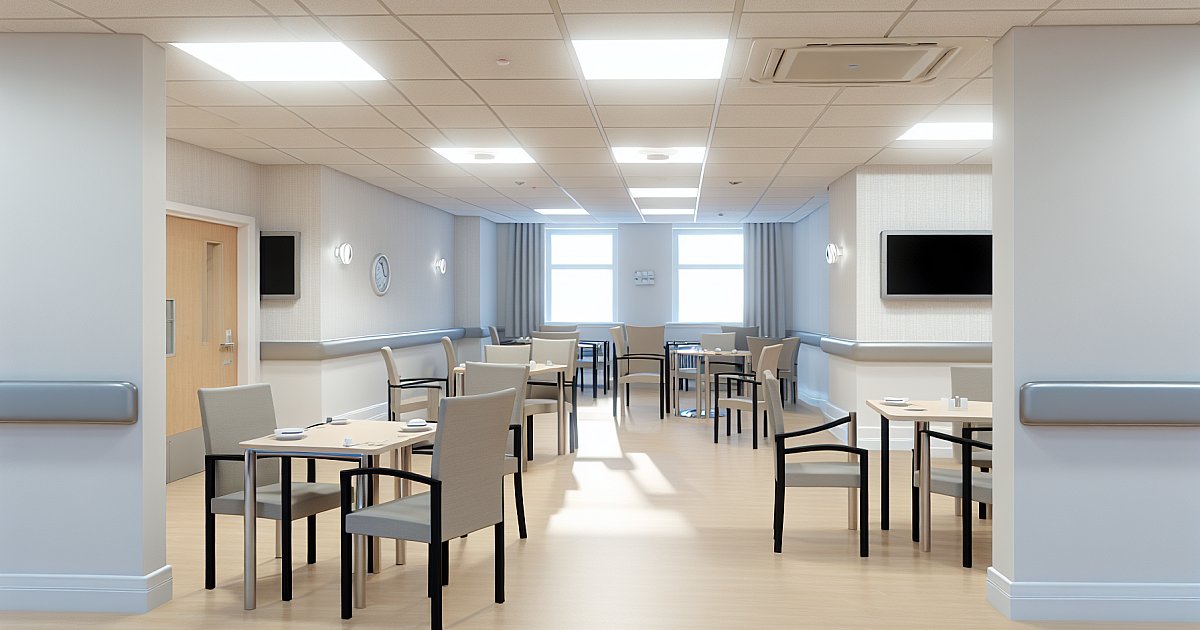
Inspectors visiting Spokane Health & Rehabilitation on April 18, 2025, found the resident lying in bed at 8:43 in the morning with an untouched scoop of scrambled eggs and a pile of hashbrowns going cold in front of her. She had a diagnosis of failure to thrive. She told inspectors she didn't like scrambled eggs or potatoes, that she had eaten only a piece of sausage and some oatmeal, and that nobody had offered her anything else.
Her dietary profile, completed the previous month, listed scrambled eggs and potatoes among her documented food dislikes. That same information was printed on her tray card, the card that traveled with her meal from the kitchen to her room.
Nobody had looked at it.
The facility's own Assistant Director of Nursing told inspectors the system was straightforward: dietary staff completed preference assessments, preferences were printed on tray cards, and residents could also circle selections from printed menus. She said she expected staff to honor what residents asked for.
The Dietary Manager gave a different picture of how things actually worked. In an interview on April 24, staff acknowledged that meals were regularly sent back to the kitchen because residents received the wrong food. Menus weren't always given to residents. When menus were completed, they weren't always returned to the kitchen in time to matter. When they were returned, the selections on them sometimes contradicted what was printed on the tray cards. The manager said they were unsure why residents kept receiving food they didn't want or had explicitly said they disliked. The explanation offered was that kitchen staff might have been rushing, might not have looked closely at what they were preparing, or might have been new.
A nursing assistant confirmed to inspectors that returning meals to the kitchen was a known occurrence. Trays went out wrong. Trays came back.
What didn't come back was an alternative for Resident 63 that morning.
The facility's administrator, identified in the report only as JJ, told inspectors that honoring resident requests was fundamental to how the facility understood its role. "This was their home," JJ said, "and staff were there to serve the residents."
For a resident diagnosed with failure to thrive, a condition defined by unintended weight loss and inadequate nutritional intake, a missed meal is not a minor inconvenience. It is a clinical event. The facility's own records showed her cognitive impairment was moderate, but inspectors noted she was able to clearly communicate her needs. She did communicate them. She had communicated them in writing, in a dietary profile completed six weeks before inspectors arrived, and that communication had been converted into a printed notation on the card attached to her breakfast tray.
The card was there. The eggs were there. She ate the sausage and the oatmeal and left the rest.
The inspection, completed April 24, 2025, cited the facility under Washington state regulations governing nutritional and dietary services. The deficiency was classified as causing minimal harm or potential for actual harm, and inspectors noted few residents were affected.
Whether Resident 63 was offered a different breakfast the following morning, or the morning after that, the inspection report does not say.
Full Inspection Report
The details above represent a summary of key findings. View the complete inspection report for Spokane Health & Rehabilitation from 2025-04-24 including all violations, facility responses, and corrective action plans.
Additional Resources
Data source: This article is based on inspection data downloaded directly from the Centers for Medicare & Medicaid Services (CMS) via Medicare.gov. CMS releases inspection reports in bulk; we publish the findings as documented by state surveyors in the official Form CMS-2567 Statement of Deficiencies.
Plan of correction: The CMS report we receive does not include the facility's plan of correction. Facilities submit plans of correction separately to state survey agencies and those responses may not be reflected in CMS data at the time of publication. The absence of a plan of correction in our data does not mean one was not filed. Readers who want information about corrective steps taken are encouraged to contact the facility directly or their state survey agency.
Corrections may have occurred: Inspection reports reflect conditions observed on the date of the survey. Facilities may have implemented corrections, staffing changes, additional training, or other remediation since the report was issued. We report what CMS provides and encourage readers to seek current information from the facility.
Editorial process: Inspection findings are extracted from CMS source documents and synthesized using AI, reviewed for factual accuracy against the original report by our editorial team.
Corrections: We strive for accuracy in everything we publish. If you believe any fact in this article is incorrect, please contact us with details, and we will review and correct it promptly.
Professional review: All content reviewed by Christopher F. Nesbitt, Sr., NH EMT & BU-trained Paralegal.
Last verified: October 27, 2026 · Our methodology
SPOKANE HEALTH & REHABILITATION in SPOKANE, WA was cited for violations during a health inspection on April 24, 2025.
She had a diagnosis of failure to thrive.
Health inspections identify deficiencies that facilities must correct. Violations range from minor documentation issues to serious safety concerns. Review the full report below for specific details and facility response.