Spokane Health & Rehabilitation: Food Safety Failures - WA
That was one of several food safety failures federal inspectors documented during an April 2025 inspection of the North Assembly Street facility. The kitchen manager acknowledged it shouldn't have happened. The registered dietician said the findings didn't meet her expectations. Neither could point to a cleaning schedule for the kitchen surfaces inspectors found covered in crumbs and spills.
The hand hygiene lapse happened during meal service. Staff WW, as the worker is identified in the inspection report, touched their face and headphones, then returned to placing food on insulated bases, covering the plates, and setting them on trays headed to residents. The kitchen manager, Staff GG, confirmed the worker should have washed their hands before returning to the task.
Staff GG also acknowledged something else during that interview: workers in the kitchen weren't consistently wearing beard coverings. The facility had a red line near the kitchen entrance, a visual marker staff were supposed to recognize as the threshold past which hair and beard coverings were required. Staff GG told inspectors they had never received clear guidance on beard coverings specifically, though they acknowledged those coverings should have been worn past that line.
The registered dietician, Staff HH, was more direct. Anyone past that red line should have full coverage, beard included, she told inspectors on April 23. Informed of what surveyors had observed, including the missed handwashing, the incomplete beard coverings, the dirty surfaces, and the labeling problems in the nourishment refrigerators, she said the findings did not meet her expectations.
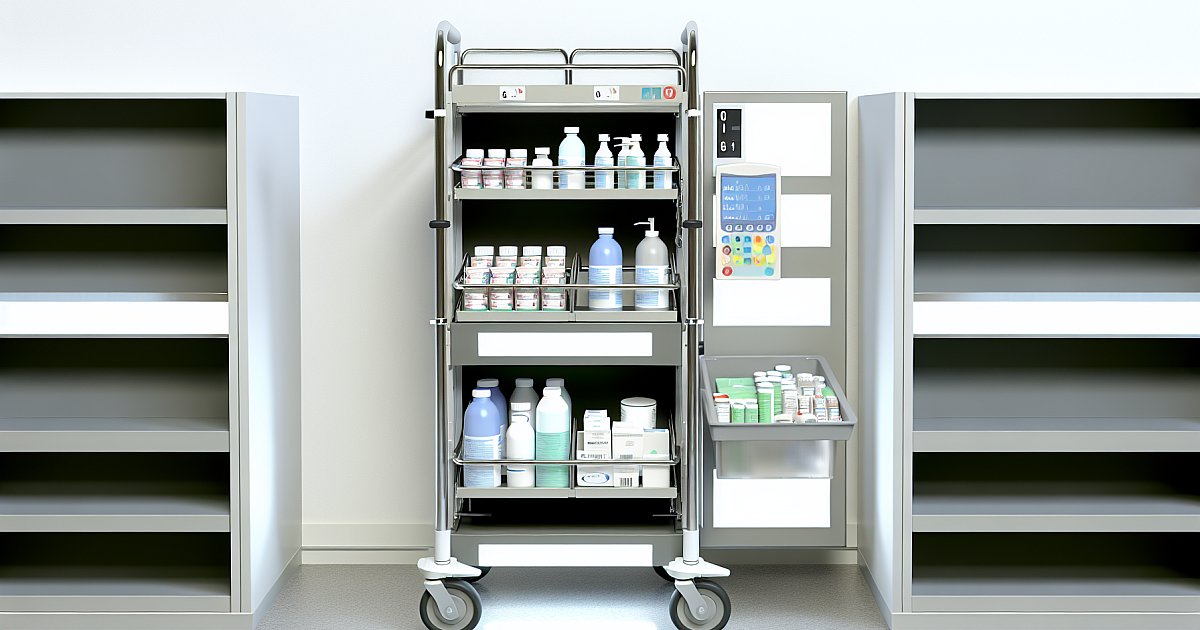
The labeling problems were extensive. Inspectors checked the nourishment refrigerators on both the North and South halls in the early morning hours of April 21, and what they found was a consistent pattern of food with missing or incomplete information.
In the North hall refrigerator, there were three strawberry Ensure drinks and four Premier Protein shakes marked with room numbers but no resident names. A container of food from Olive Garden had a last name and room number but no date indicating when it had been brought in. A partially used container of roasted red pepper hummus had none of those things, no name, no room number, no date.
The South hall refrigerator had two opened containers of Simply Orange juice labeled with a room number but no resident name and no date indicating when they had been opened. And then there was a pitcher of clear yellow liquid, about a quarter full, sitting in the refrigerator with no date and no label of any kind identifying what it was.
An unlabeled liquid in a nursing home refrigerator is not a minor paperwork gap. Residents in these facilities often have dietary restrictions, swallowing disorders, or conditions that make consuming the wrong liquid dangerous. Without a label, no one handling that pitcher, whether a nurse, an aide, or a dietary worker, could know what it was, who it belonged to, or how long it had been sitting there.
Staff GG, when informed of the unclean surfaces inspectors had observed in the kitchen, acknowledged they should have been cleaned. They also acknowledged there was no cleaning schedule or log sheet for those tasks at the time of the inspection.
The violations were cited at the level of minimal harm or potential for actual harm, with some residents affected. CMS assigned the inspection event ID 505322. The facility's plan of correction was not included in the publicly available inspection record.
The registered dietician's summary of the findings was brief. The kitchen manager's was similar. Neither disputed what inspectors had found. What remained, sitting in a refrigerator on the South hall, was a quarter-full pitcher of something, unlabeled, undated, and belonging to no one anyone could identify.
Full Inspection Report
The details above represent a summary of key findings. View the complete inspection report for Spokane Health & Rehabilitation from 2025-04-24 including all violations, facility responses, and corrective action plans.
Additional Resources
Data source: This article is based on inspection data downloaded directly from the Centers for Medicare & Medicaid Services (CMS) via Medicare.gov. CMS releases inspection reports in bulk; we publish the findings as documented by state surveyors in the official Form CMS-2567 Statement of Deficiencies.
Plan of correction: The CMS report we receive does not include the facility's plan of correction. Facilities submit plans of correction separately to state survey agencies and those responses may not be reflected in CMS data at the time of publication. The absence of a plan of correction in our data does not mean one was not filed. Readers who want information about corrective steps taken are encouraged to contact the facility directly or their state survey agency.
Corrections may have occurred: Inspection reports reflect conditions observed on the date of the survey. Facilities may have implemented corrections, staffing changes, additional training, or other remediation since the report was issued. We report what CMS provides and encourage readers to seek current information from the facility.
Editorial process: Inspection findings are extracted from CMS source documents and synthesized using AI, reviewed for factual accuracy against the original report by our editorial team.
Corrections: We strive for accuracy in everything we publish. If you believe any fact in this article is incorrect, please contact us with details, and we will review and correct it promptly.
Professional review: All content reviewed by Christopher F. Nesbitt, Sr., NH EMT & BU-trained Paralegal.
Last verified: October 27, 2026 · Our methodology
SPOKANE HEALTH & REHABILITATION in SPOKANE, WA was cited for violations during a health inspection on April 24, 2025.
That was one of several food safety failures federal inspectors documented during an April 2025 inspection of the North Assembly Street facility.
Health inspections identify deficiencies that facilities must correct. Violations range from minor documentation issues to serious safety concerns. Review the full report below for specific details and facility response.