Rolling Hills Rehab: Resident Abuse Left Unaddressed - WI
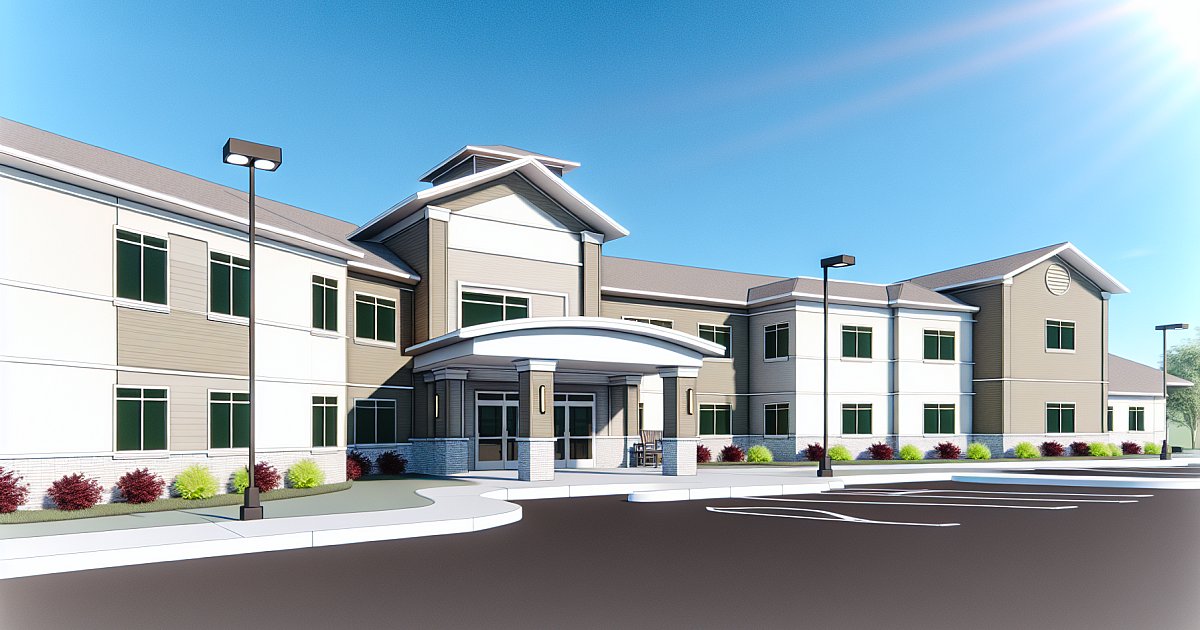
That finding sits at the center of a February 2025 federal inspection of Rolling Hills Rehab, a nursing facility on County Highway B in Sparta. Inspectors cited the facility for failing to protect residents from abuse, documenting two separate incidents involving the same aggressive resident and concluding that administrators had not followed through on their own policies for identifying and reporting what happened.
The resident at the center of both incidents, identified in inspection records only as R35, had a documented pattern of aggressive behavior on the unit. A nursing progress note entered on January 28, 2025, described what had happened the evening before. During supper on January 27, R35 grabbed the walker belonging to another resident, R36. R36 tried to stop him verbally. R35 grabbed R36. R36 threatened to punch R35 if he touched him again. Staff intervened.
That same evening, hours later, R35 was found in another resident's room and refused to follow redirection from a certified nursing assistant. He swung at the CNA and hit her in the chest.
The progress note was written as a late entry, logged more than 24 hours after the events it described.
When a surveyor sat down with R36 on February 19, two days before the inspection closed, R36 did not need to be reminded of what had happened. "Yes, R35," R36 said, when asked about resident-to-resident altercations on the unit. "Who has not had an altercation with R35."
R36 described the dining room incident in detail. R35 had come at him, grabbed his walker, then swung at him and grabbed his wrist. R36 said he was not physically injured. He also said R35 is very strong, and that it frightened him.
What R36 said next is what the inspection report treats as the lasting consequence of the facility's failure. R36 told the surveyor that he tends to stay in his room now because he does not want those interactions with R35 again. R35 has outbursts all the time in the dining room, R36 said. R36 dislikes that kind of aggressive behavior. So he stays in his room.
A nursing home resident, afraid to eat in the dining room, retreating to his room to avoid another encounter. That is the outcome the facility's abuse policies were designed to prevent.
The inspection report documents a second incident as well, involving a different resident, R43, and a certified nursing assistant identified as CNA D. The details of that incident are limited in the inspection narrative, but inspectors found that R43 was subjected to verbal abuse from CNA D and was not protected from it. The level of harm was characterized as minimal harm or potential for actual harm.
On the morning of February 20, the surveyor interviewed the Director of Nursing, identified as DON B. Asked what the expectations were for resident-to-resident altercations and how residents are protected from abuse, DON B said staff follow facility policy and should notify DON B, the nursing home administrator, or the social worker about any potential verbal or physical abuse.
Fourteen minutes later, the surveyor interviewed Nursing Home Administrator A directly. The surveyor told NHA A plainly: the incident with R43 was verbal abuse, and the incident with R36 did in fact happen. R36 was grabbed and hit by R35. That is physical abuse.
The administrator's response, recorded in the inspection report, was an acknowledgment. NHA A indicated that residents were not protected from abuse because staff had not followed through on the facility policy. NHA A indicated that everyone should be following the facility policy for abuse.
That answer, offered the morning the inspection concluded, is notable for what it concedes. The administrator did not dispute the surveyor's characterization of the events. NHA A did not argue that the dining room incident was something less than physical abuse, or that the threat R36 experienced was not serious. The administrator confirmed that the policy existed, confirmed that it had not been followed, and said it should have been.
The nursing progress note from January 28 shows that staff were aware of what happened. Someone documented it. The late entry, written more than 24 hours after the supper-time incident and the evening assault on the CNA, captured the basic facts: the walker grab, the threat, the physical contact, the combative behavior later that night. What it did not do, according to inspectors, was trigger the abuse identification and reporting process the facility's own policies required.
The distinction matters because abuse reporting is not just a paperwork obligation. It is the mechanism by which a facility is supposed to assess whether a resident poses an ongoing risk to others, whether the victim needs follow-up, and whether the response, separating the residents and monitoring for further incidents, is actually working.
R36 told the surveyor that R35 has outbursts all the time in the dining room. That is not a description of an isolated incident that was resolved when staff intervened on January 27. It is a description of a continuing pattern that R36 had adapted his daily life around.
The inspection covered two separate abuse failures, one involving a staff member and a resident, one involving two residents. In both cases, the harm was classified at the lower end of the severity scale. No resident was documented as having suffered a serious physical injury. The citation does not carry an immediate jeopardy designation.
But R36's account of his own behavior since the incident, the self-imposed isolation, the meals skipped in the dining room, the deliberate avoidance of common spaces, describes something the inspection report's harm classification does not fully capture. He was not hospitalized. He was not visibly injured. He was frightened, and he changed how he lives.
Rolling Hills Rehab has 50 certified beds according to federal records. The facility is on County Highway B on the western edge of Sparta, a small city in Monroe County. The February inspection was a standard health survey.
The administrator told the surveyor that everyone should be following the facility policy for abuse. R36, who has been staying in his room, was not asked whether anyone had followed up with him after the dining room incident, or whether anyone had told him what steps the facility was taking to make sure it did not happen again. The inspection report does not indicate that anyone did.
Full Inspection Report
The details above represent a summary of key findings. View the complete inspection report for Rolling Hills Rehab Ctr from 2025-02-20 including all violations, facility responses, and corrective action plans.
Additional Resources
Data source: This article is based on inspection data downloaded directly from the Centers for Medicare & Medicaid Services (CMS) via Medicare.gov. CMS releases inspection reports in bulk; we publish the findings as documented by state surveyors in the official Form CMS-2567 Statement of Deficiencies.
Plan of correction: The CMS report we receive does not include the facility's plan of correction. Facilities submit plans of correction separately to state survey agencies and those responses may not be reflected in CMS data at the time of publication. The absence of a plan of correction in our data does not mean one was not filed. Readers who want information about corrective steps taken are encouraged to contact the facility directly or their state survey agency.
Corrections may have occurred: Inspection reports reflect conditions observed on the date of the survey. Facilities may have implemented corrections, staffing changes, additional training, or other remediation since the report was issued. We report what CMS provides and encourage readers to seek current information from the facility.
Editorial process: Inspection findings are extracted from CMS source documents and synthesized using AI, reviewed for factual accuracy against the original report by our editorial team.
Corrections: We strive for accuracy in everything we publish. If you believe any fact in this article is incorrect, please contact us with details, and we will review and correct it promptly.
Professional review: All content reviewed by Christopher F. Nesbitt, Sr., NH EMT & BU-trained Paralegal.
Last verified: November 18, 2026 · Our methodology
Rolling Hills Rehab Ctr in Sparta, WI was cited for abuse-related violations during a health inspection on February 20, 2025.
That finding sits at the center of a February 2025 federal inspection of Rolling Hills Rehab, a nursing facility on County Highway B in Sparta.
Health inspections identify deficiencies that facilities must correct. Violations range from minor documentation issues to serious safety concerns. Review the full report below for specific details and facility response.
