Crest Pointe Rehab: Dialysis Catheter Safety Failures - NJ
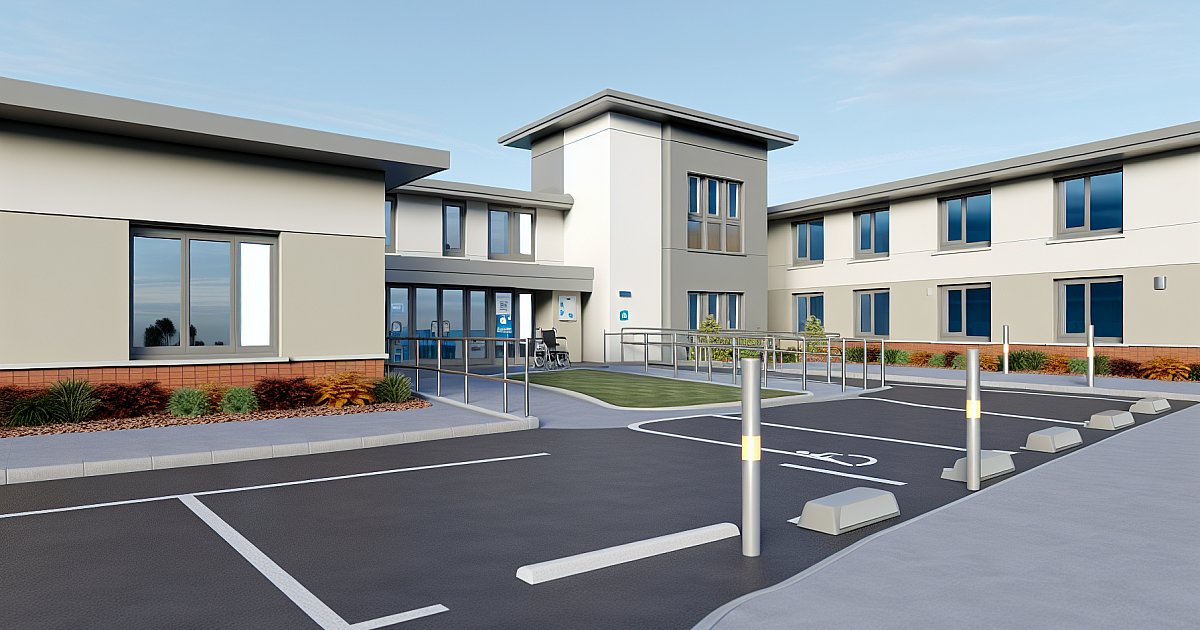
The facility sits on Hulse Road in Ocean County. Some of its residents require hemodialysis, a treatment that filters waste and fluid from the blood when the kidneys can no longer do it. Getting there requires access to the bloodstream, usually through one of three types of vascular access points: a hemodialysis catheter, an arteriovenous fistula, or an arteriovenous graft. Each carries serious risk if handled incorrectly.
Crest Pointe's own policy, written in February 2023, was direct about who could touch a hemodialysis catheter: only medical staff who had received training and demonstrated clinical competency. The policy also spelled out what proper care of an AV fistula or AV graft looks like, including checking the access site at regular intervals, palpating it to feel for a thrill, or using a stethoscope to listen for the characteristic whoosh, the bruit, that confirms blood is moving through the access the way it should be.
The inspectors found the facility was not following that policy.
The deficiency was tagged under New Jersey state regulation NJAC 8:39-27.1(a), and CMS rated the level of harm as minimal harm or potential for actual harm. The violation affected some residents.
That phrase, "potential for actual harm," carries more weight than it might appear to. Hemodialysis catheters are among the highest-risk access points used in any care setting. They run directly into large central veins, typically the jugular or subclavian. An untrained staff member who accesses one incorrectly can introduce bacteria into the bloodstream, cause an air embolism, or disrupt a clot in ways that produce immediate, life-threatening consequences. Fistulas and grafts are somewhat more forgiving, but a staff member who fails to assess patency, who doesn't check for the thrill or the bruit, can miss a clotted or failing access before a resident ever gets to their dialysis session.
The difference between a trained hand and an untrained one, in this context, is not procedural. It is clinical.
Crest Pointe had already written down what the standard was. The February 2023 policy existed. The competency requirement was in writing. Whatever broke down between that document and the June 2024 inspection, inspectors found it had broken down enough to cite the facility before state and federal regulators.
The facility was given the opportunity to submit a plan of correction. CMS directed anyone seeking information about that plan to contact the nursing home or the New Jersey state survey agency directly.
What the inspection record does not say is how many residents were affected in specific terms, which staff accessed the catheters or vascular sites in question, or whether any resident experienced a complication as a result. The record is narrow. The citation stands on what it found: a gap between a written safety policy and what was actually happening on the floor.
For residents on hemodialysis in a long-term care setting, that gap is the whole problem. They cannot drive themselves to a dialysis center. They cannot verify the credentials of the person connecting them to a machine. They are, by definition, dependent on the facility to enforce the rules the facility itself wrote.
Crest Pointe's policy said trained staff only. Inspectors found that was not what was happening. The residents in those rooms had no way to know the difference.
Full Inspection Report
The details above represent a summary of key findings. View the complete inspection report for Crest Pointe Rehabilitation and Healthcare Center from 2024-06-12 including all violations, facility responses, and corrective action plans.
Additional Resources
Data source: This article is based on inspection data downloaded directly from the Centers for Medicare & Medicaid Services (CMS) via Medicare.gov. CMS releases inspection reports in bulk; we publish the findings as documented by state surveyors in the official Form CMS-2567 Statement of Deficiencies.
Plan of correction: The CMS report we receive does not include the facility's plan of correction. Facilities submit plans of correction separately to state survey agencies and those responses may not be reflected in CMS data at the time of publication. The absence of a plan of correction in our data does not mean one was not filed. Readers who want information about corrective steps taken are encouraged to contact the facility directly or their state survey agency.
Corrections may have occurred: Inspection reports reflect conditions observed on the date of the survey. Facilities may have implemented corrections, staffing changes, additional training, or other remediation since the report was issued. We report what CMS provides and encourage readers to seek current information from the facility.
Editorial process: Inspection findings are extracted from CMS source documents and synthesized using AI, reviewed for factual accuracy against the original report by our editorial team.
Corrections: We strive for accuracy in everything we publish. If you believe any fact in this article is incorrect, please contact us with details, and we will review and correct it promptly.
Professional review: All content reviewed by Christopher F. Nesbitt, Sr., NH EMT & BU-trained Paralegal.
Last verified: November 21, 2026 · Our methodology
CREST POINTE REHABILITATION AND HEALTHCARE CENTER in PT PLEASANT, NJ was cited for violations during a health inspection on June 12, 2024.
The facility sits on Hulse Road in Ocean County.
Health inspections identify deficiencies that facilities must correct. Violations range from minor documentation issues to serious safety concerns. Review the full report below for specific details and facility response.
